
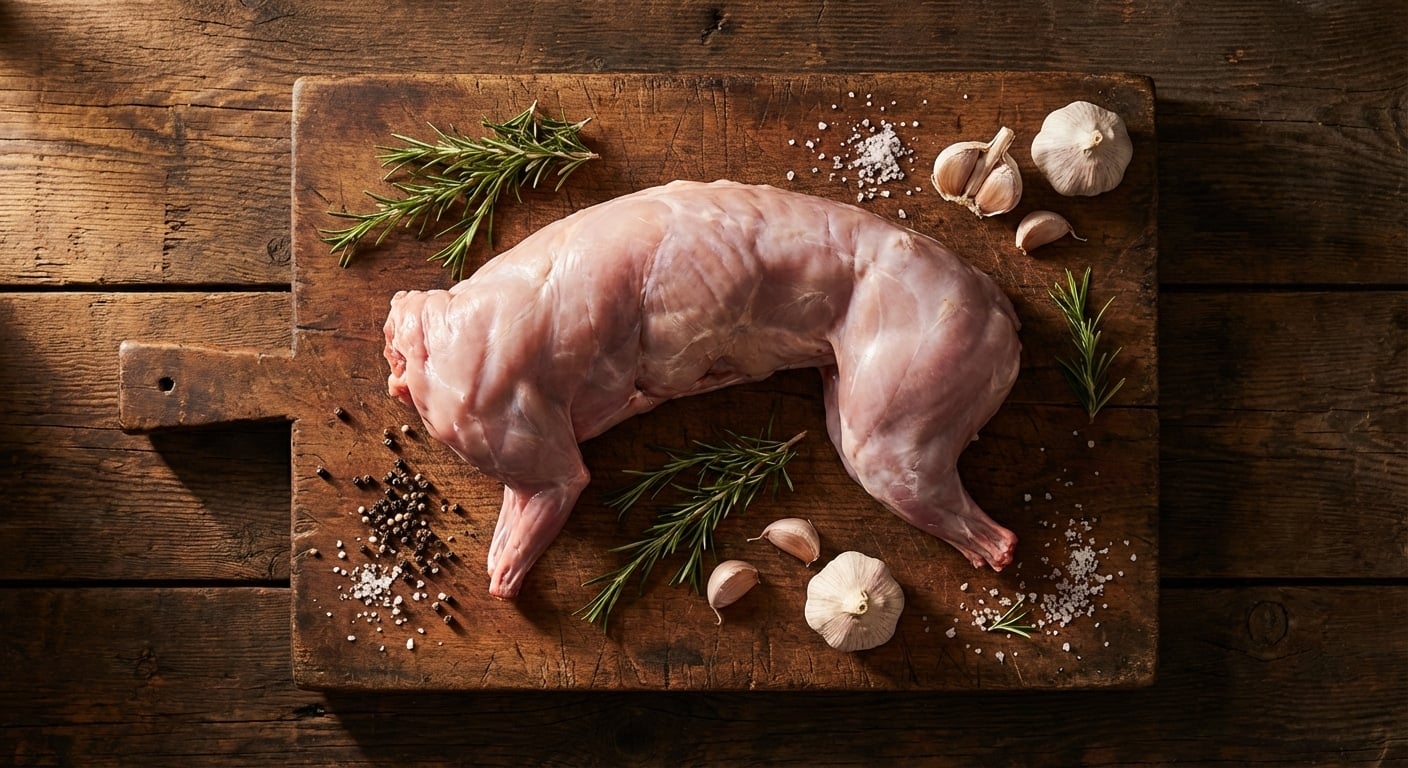
If you've searched the Woolworths meat aisle for rabbit — or typed "rabbit meat Woolworths" into Google — you already know the answer: it isn't there. That's not a stocking issue or a seasonal gap. It's a deliberate policy. Meanwhile, rabbit is one of the leanest, most nutrient-dense meats you can buy, and Sydney buyers can order it online, delivered frozen and cut to order.
TL;DR: Woolworths Group's published Animal Welfare Policy explicitly prohibits rabbit meat from being sold in its supermarkets. Rabbit offers one of the best protein-to-fat ratios of any common meat in Australia (Sustainable Table Australia), and is available online through specialty butchers — delivered frozen, with cut-to-order service. Wild and farmed options suit different cooking styles.
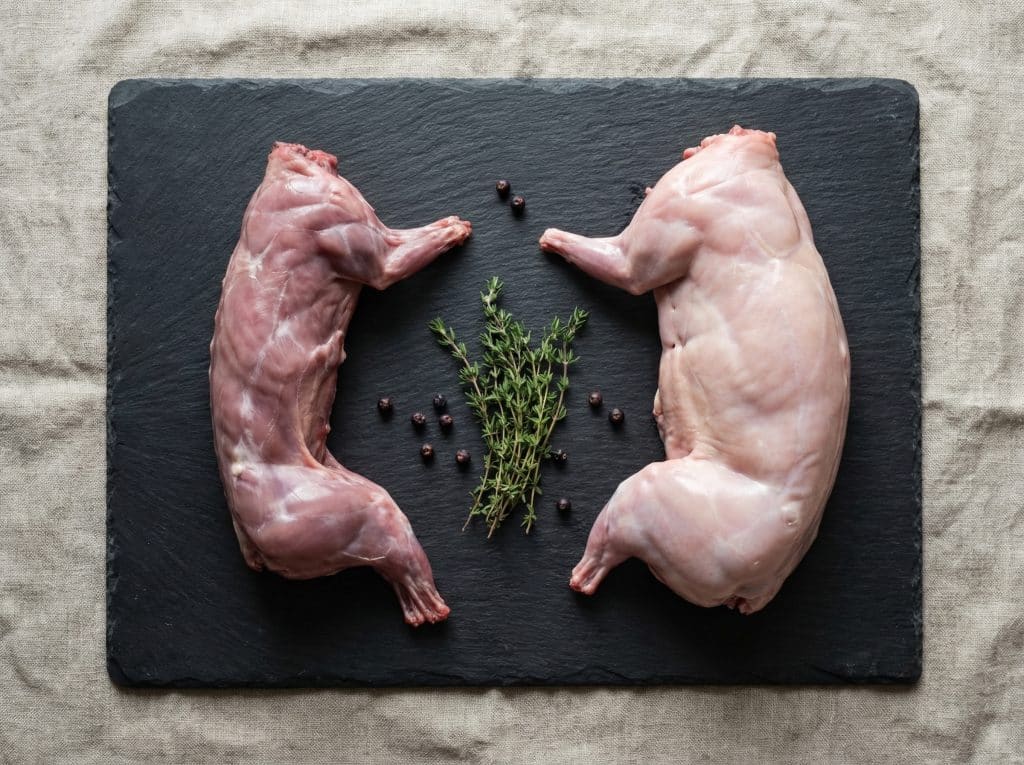
Wild rabbit has one of the highest protein-to-fat ratios among commonly available meats, making it a standout choice for high-protein, low-fat cooking (Sustainable Table Australia). According to USDA FoodData Central data, wild rabbit (raw) delivers 22.1g of protein per 100g at just 2.4g of fat — a protein-to-fat ratio that beats beef, pork, lamb, and duck by a wide margin.
It's also richer in omega-3 fatty acids than chicken or pork, and provides strong levels of vitamins B3 and B12, phosphorus, potassium, and selenium (Sustainable Table Australia). The flavour is mild and clean — not the strong game flavour people sometimes expect — and the meat is naturally white.
Worth knowing: Rabbit's leanness works against it in one specific way: there's very little fat to baste the meat as it cooks, which is why wet cooking methods (braises, stews, ragù) consistently produce better results than dry-heat methods. Start there and you won't be disappointed.
Woolworths Group's Animal Welfare Policy explicitly states the company "will not sell farmed rabbit" as a food product (Woolworths Group Animal Welfare Policy). This applies across all Woolworths Supermarkets in Australia. It's the same list that prohibits foie gras and horse meat — a deliberate welfare exclusion, not a supply chain gap.
So the search ends there. No amount of asking at the deli counter, checking different stores, or timing your visits differently will change the outcome. Coles operates under similar welfare commitments. Australian supermarkets are simply not the channel for rabbit.
The upside of this: Specialty butchers who stock rabbit do so properly — sourced from approved Australian abattoirs, handled cold throughout the supply chain, and available in formats supermarkets couldn't offer anyway: whole carcass, halved, or jointed to your specification.
Does that mean rabbit is hard to find? Not if you know where to look. Sydney buyers have reliable online options with home delivery.
Both wild and farmed rabbits are legally available for purchase in Australia, but they're quite different products. Wild rabbit sold commercially must be processed at an approved abattoir — you can't legally buy wild-caught rabbit directly from a hunter under NSW food safety law (NSW DPI Primefact 104). Reputable suppliers source wild rabbits that've been properly processed and inspected.
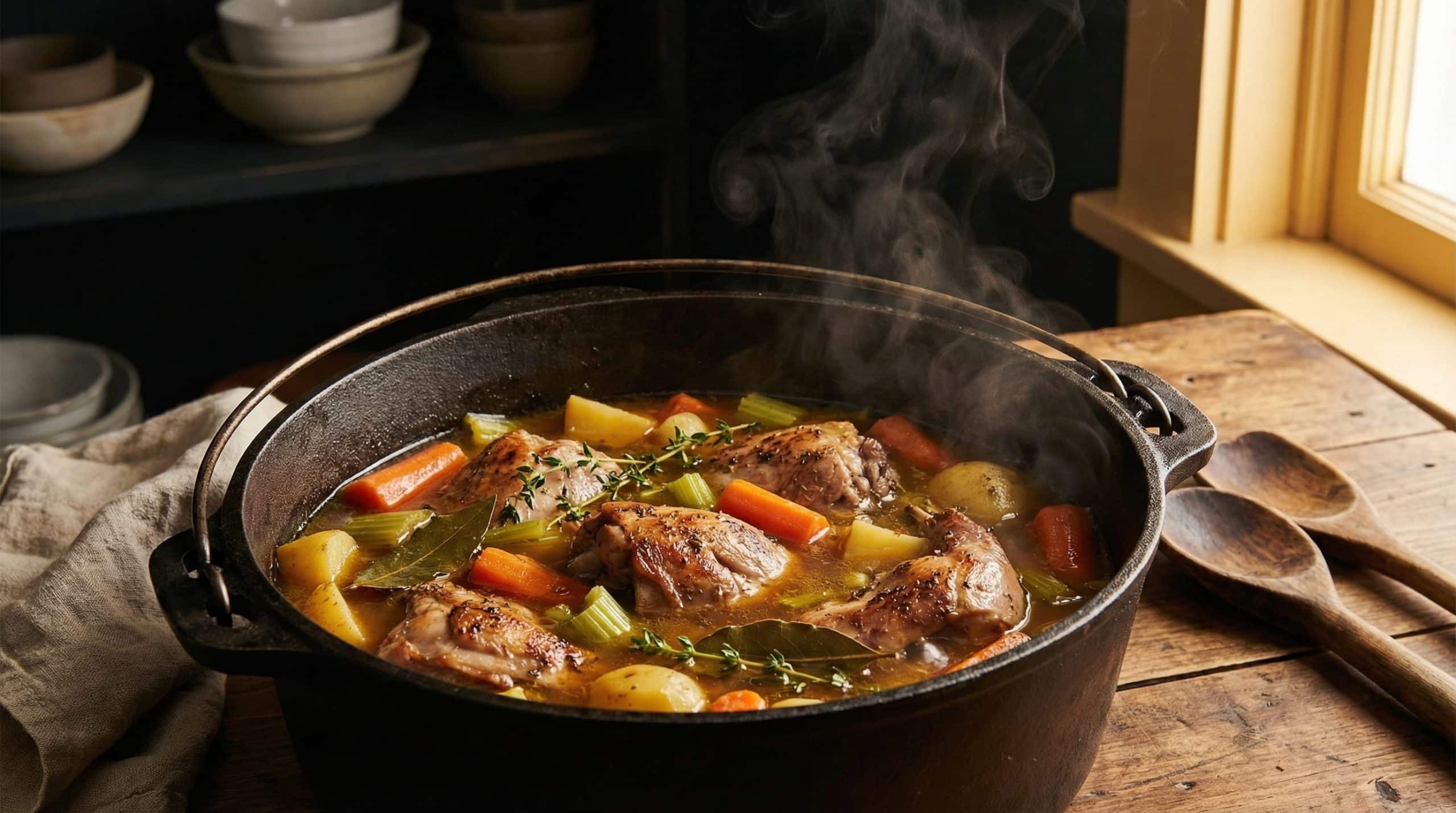
Here's how the two compare across the factors that matter most in the kitchen:
| Wild Rabbit | Farmed Rabbit | |
|---|---|---|
| Flavour | Rich, gamey, complex | Mild, subtle, close to chicken |
| Texture | Dense and firm | Softer, more tender |
| Fat content | Very low (2.4g/100g raw) | Low (5.6g/100g raw) |
| Carcass size | Smaller, less uniform | Larger, consistent portions |
| Best cooking method | Slow braise, ragù, pies | Roasting, pan-fry, stew |
| Skill level | Intermediate | Beginner-friendly |
| Source | Harvested wild, regional NSW | Farm-raised, controlled diet |
Farmed rabbit is the easier entry point. Its softer white meat behaves like chicken, it responds well to dry-heat cooking, and uniform sizing makes portion control straightforward. Wild rabbit rewards patience — low-and-slow cooking is non-negotiable, but the result is genuinely excellent.
From the team: Customers buying wild rabbit for the first time nearly always succeed with a ragù or slow braise. Wild rabbit cooked quickly tends to tighten. Give it time and heat, and it falls apart into something most people can't believe came from a rabbit.
Sydney buyers looking for rabbit meat have one practical path: an online butcher with metro delivery. Rabbit isn't available at supermarkets, and only a handful of specialty game meat suppliers serve the Sydney area. The format that works best is frozen — rabbits freeze cleanly without loss of flavour or texture, so you can order ahead and cook when you're ready.

Ordering online is the standard way to get rabbits in Sydney. Expect your order to arrive frozen or chilled, vacuum-sealed, with a minimum order threshold that varies by supplier. Delivery lead times are typically 2–5 business days, depending on the dispatch schedule.
Check here for the delivery schedule to your suburb.
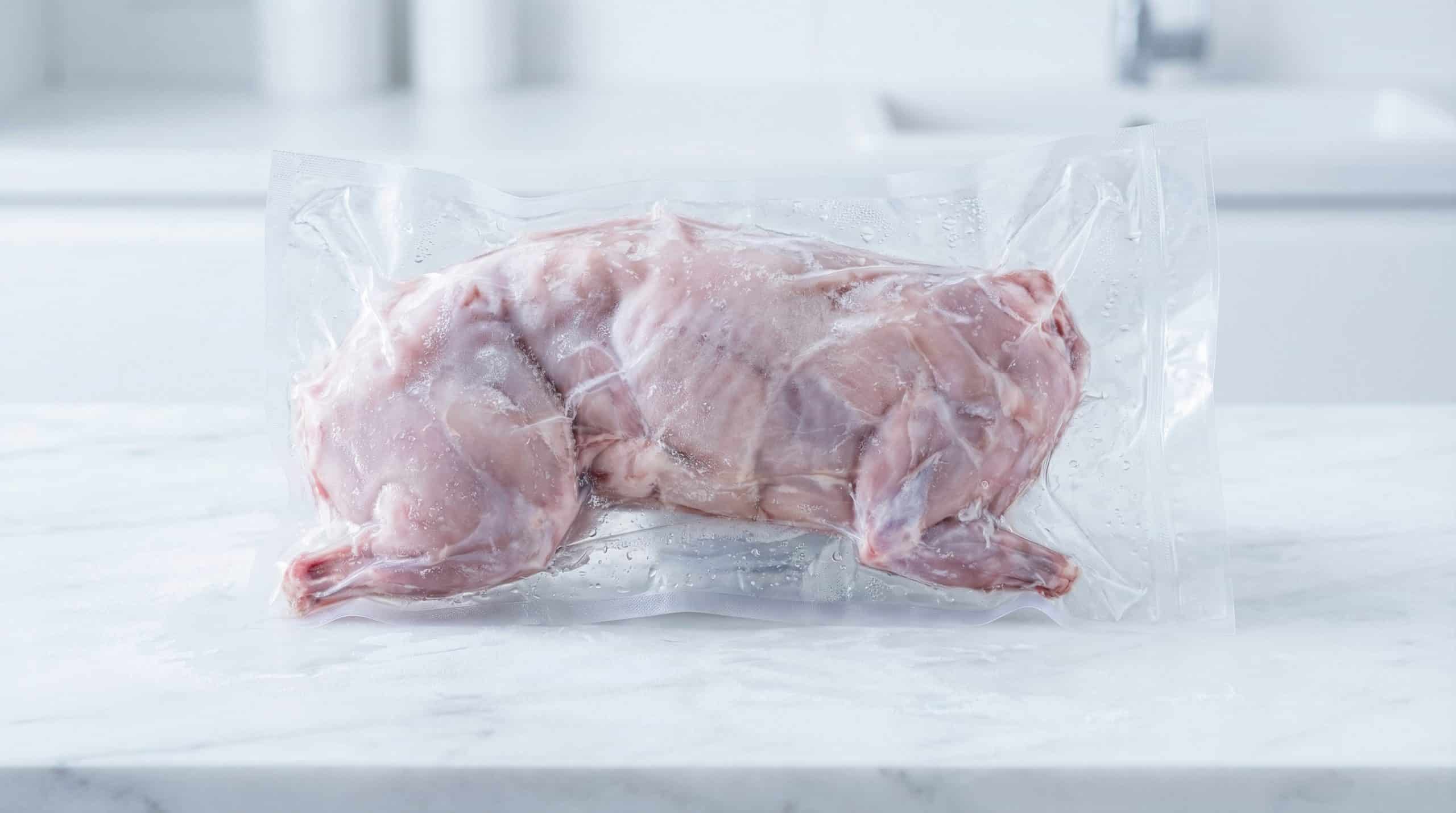
Pryde Butchery stocks both wild and farmed rabbit for Sydney delivery. Both options arrive frozen/chilled and vacuum-sealed. The team can cut your rabbit to order — add your preferred breakdown in the checkout notes.
Sourced from regional NSW and processed at an approved facility. Leaner, denser, and more flavoursome than farmed rabbit. Best suited to slow braises, ragù, game pies, and stews where the flavour can develop over time.
Milder flavour, softer white meat, more uniform sizing. Works well roasted, pan-fried, or in a slow-cooked stew. The easier starting point for anyone cooking rabbit for the first time.
Both are sold frozen/chilled (depending on delivery schedule). Cut-to-order available — add a note at checkout specifying whole, halved, or jointed.
No. Woolworths Group's Animal Welfare Policy explicitly prohibits the sale of rabbit meat in its supermarkets — the policy lists farmed rabbit alongside foie gras and horse meat as products the group will not sell. Coles operates under similar welfare commitments. Rabbit is not available at any major Australian supermarket chain.
Wild rabbit is leaner (2.4g fat per 100g raw vs 5.6g for farmed), has a denser texture, and delivers a richer, more complex flavour that suits slow cooking. Farmed rabbit has softer white meat similar to chicken, is milder in flavour, and is more forgiving for home cooks. Both must be processed at an approved Australian abattoir before sale (NSW DPI Primefact 104).
Yes. Both wild and farmed rabbit meat is legal to buy and eat across New South Wales and Australia. Wild rabbit sold commercially must be processed at an approved abattoir — purchasing wild-caught rabbit directly from a hunter for home consumption falls outside NSW food safety regulations. All commercial rabbit sold by reputable butchers meets these requirements.
Rabbit from Pryde Butchery is dispatched frozen but travels through a chilled delivery chain, so it may arrive partially or fully thawed. Check the state of the meat when your order arrives: if it's still frozen or has ice crystals present, you can return it to the freezer. If it has thawed, refrigerate immediately and cook within 2-3 days. Rabbit stores well frozen at −18°C for up to 6 months without quality loss.
Yes. We can cut-to-order options for whole rabbit — common requests include halved (front and back), jointed into 6–8 pieces, or saddle only. Add your preferred breakdown in the order notes at checkout.
For a broader look at rabbits' place in Australian food culture and their full nutritional profile, see rabbit meat in Australia.
