
Eye fillet is the one steak in the cabinet everyone's heard of but not everyone can actually explain. I get asked about it more than any other cut at the counter — usually some version of "what's the difference between this and scotch fillet, and why does it cost so much more?"
Fair question. It's beef tenderloin, it's the most tender cut on the whole animal, and it's also the one most home cooks quietly ruin by treating it like any other steak. Get the heat and timing right and it's the best thing you'll put on a plate all year. Get it wrong and you've paid a premium price for a dry, disappointing dinner.
This guide covers what eye fillet actually is, where it sits next to Pryde's other premium cuts, how it's different from filet mignon and chateaubriand (three names that get thrown around interchangeably and shouldn't be), and exactly how to cook it so it stays the tender, juicy cut you paid for.
Eye fillet is beef tenderloin — the leanest, most tender cut on the animal, with a mild flavour that's traditionally paired with a sauce. Cook it hot and fast to medium-rare only; because it has almost no fat or connective tissue, it dries out fast if you overcook it or try to slow-cook it.
Eye fillet is beef tenderloin — the long, narrow strip of muscle tucked against the animal's backbone, opposite the ribs. It's called the "psoas major" if you want the technical name, but nobody at the butcher counter calls it that. Tenderloin, fillet, eye fillet, filet — they're all the same cut, just different names depending on who's talking.
What makes it special is location. This muscle sits deep along the spine and barely does any work supporting the animal's weight. Hardworking muscles build up connective tissue over time, which is what makes cuts like chuck or gravy beef tough and in need of a long, slow cook. Eye fillet never has to work that hard, so it never toughens up. That's the whole story behind why it's so tender.
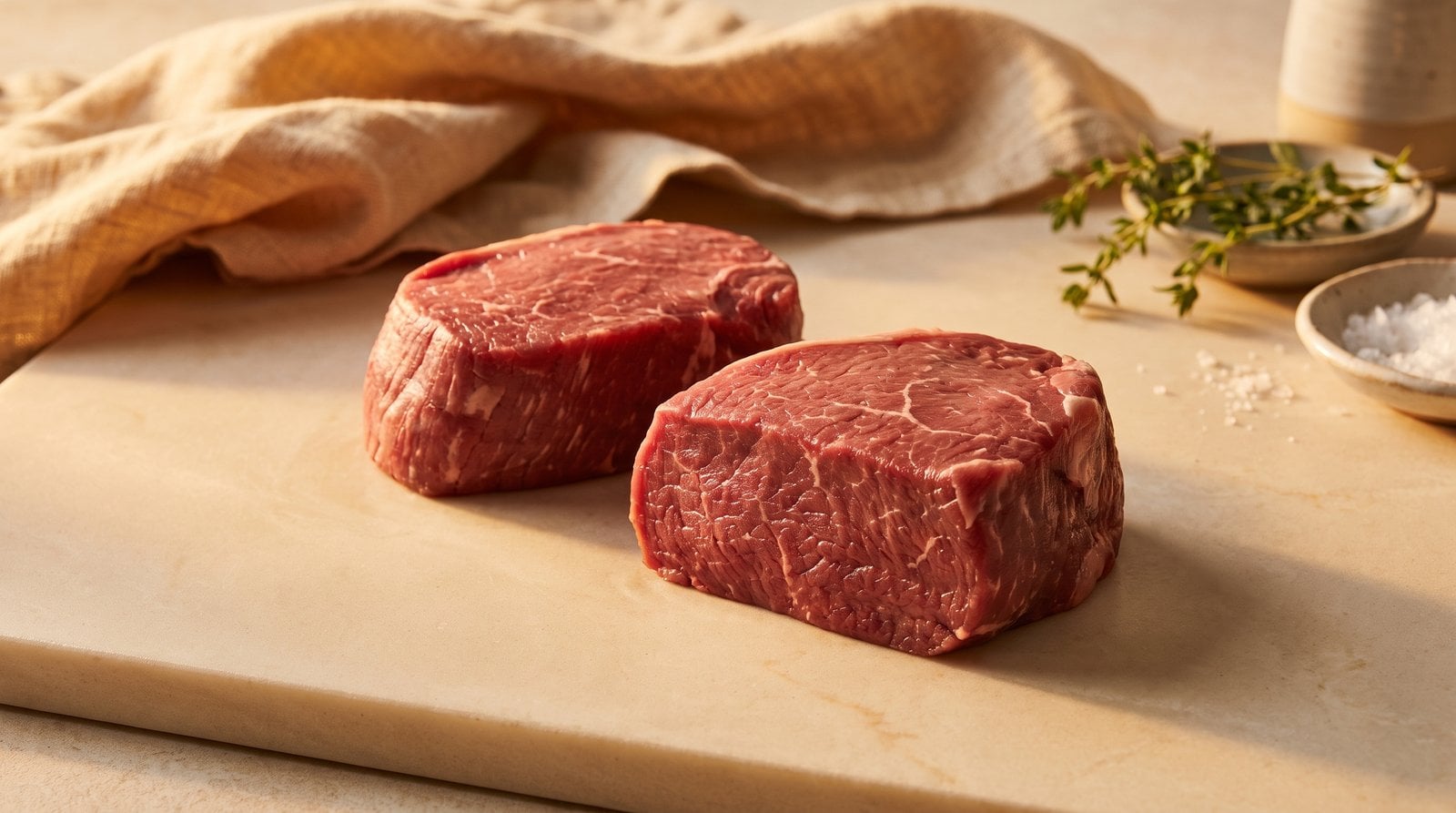
The tenderness and the leanness come from exactly the same place. Because this muscle does so little work, it never develops the marbling that gives cuts like scotch fillet their rich, beefy flavour. You're trading flavour intensity for texture — and it's a genuine trade, not a flaw in the cut.
🔪 From the butcher: I've had customers bring eye fillet back thinking something was wrong with it because it "didn't taste like a steak should." Nothing's wrong — that's just what a low-fat, low-work muscle tastes like. It's not meant to punch you in the face with flavour. It's meant to be tender enough to cut with a fork.
Because the flavour is genuinely mild, eye fillet has always been served with something alongside it — peppercorn sauce, a red wine jus, mushroom sauce, béarnaise, or simple garlic butter. That's not restaurants dressing up a boring cut. It's the traditional way this steak has always been eaten, precisely because the sauce and the texture are meant to work together.
If you're standing at the cabinet trying to decide which premium cut to buy, here's the quick version: eye fillet is the leanest and most tender but the mildest in flavour. Scotch fillet (rib eye) trades some of that tenderness for heavier marbling and a beefier taste. Porterhouse and sirloin sit in the middle — a solid balance of both. Rump is the most affordable and the most flavourful pound-for-pound, but it needs more attention with cooking time and slicing against the grain to avoid toughness.
| Cut | Tenderness | Marbling | Flavour | Best for |
|---|---|---|---|---|
| Eye fillet | Highest | Lowest | Mild | Special occasions, sauce-based dishes |
| Scotch fillet / rib eye | High | High | Rich, beefy | Grilling, pan-searing |
| Porterhouse / sirloin | Medium-high | Medium | Balanced | Everyday premium steak night |
| Rump | Medium | Low-medium | Strong, beefy | Weeknight budget-friendly steak |
Want the full breakdown? We've already covered scotch fillet vs eye fillet in detail, and if naming conventions have you confused, our scotch fillet vs ribeye guide sorts out the terminology.
Here's where most of the confusion actually lives, and it's an easy fix: eye fillet, filet mignon, and chateaubriand aren't three different cuts. They're three different portions of the exact same muscle.
Filet mignon is a small, individual medallion sliced from the narrower tail end of the tenderloin — the "mignon" literally means "dainty" in French, and it's usually the portion you'll see on a restaurant menu as an individual steak. Chateaubriand is a much larger roasting portion cut from the thick centre of the same muscle, traditionally cooked whole and carved tableside for two or more people. Eye fillet is simply the Australian butchery name for the tenderloin as a whole, or for the steaks cut from it.
So next time a menu lists all three like they're separate options, you'll know what's actually going on: same muscle, different portion, different name.
This is the part that matters most. Eye fillet needs quick, high-heat cooking finished at medium-rare — never low-and-slow. Tougher cuts like chuck or gravy beef need a long, gentle cook to break down connective tissue into something tender. Eye fillet doesn't have that connective tissue to break down in the first place, so a braise or a slow roast just cooks all the moisture straight out of it. There's nothing left to render.
Step 1 — Bring it to room temperature. Pull the steak out of the fridge 30-45 minutes before cooking. A cold steak cooks unevenly, overcooking on the outside before the centre catches up.
Step 2 — Sear it hard and fast. Get your pan properly hot before the steak goes anywhere near it — it should sizzle the second it hits the surface. Sear for 3-4 minutes per side for a standard 2.5-3cm steak. For a thicker centre-cut piece, sear all sides first, then finish in a 180°C oven for a few minutes, or use a reverse sear if you'd rather bring it up to temperature gently before the final crust.
Step 3 — Rest it properly. Five minutes minimum, covered loosely with foil, before you cut into it. Skip this, and you'll watch half the juice run straight onto the board.
Aim for an internal temperature of 52-55°C for medium-rare, and pull the steak off the heat a couple of degrees early — carry-over cooking will finish the job while it rests. For the full range across every doneness level, our steak doneness temperature chart has the exact numbers.
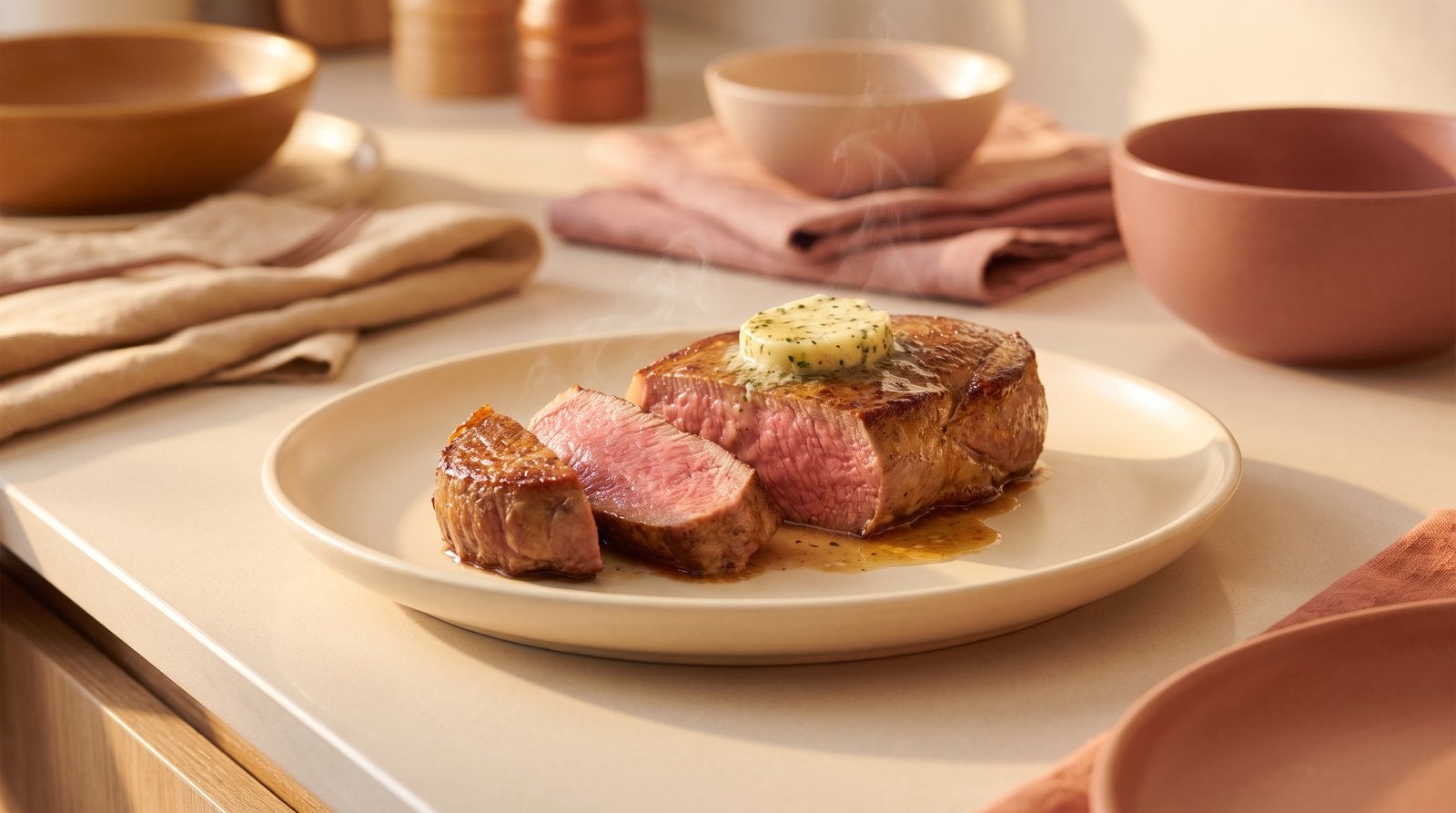
The number one mistake home cooks make with eye fillet is simply cooking it too far. Because there's no fat cushioning the meat, it goes from perfect to dry in the space of a couple of minutes past medium-rare. A few others worth knowing:
Skipping the rest. Cutting straight into the steak the second it comes off the heat means the juices end up on the board instead of in the meat. Give it the five minutes.
Treating it like a braising cut. If a recipe calls for hours in the oven or a slow cooker, it wasn't written for eye fillet. That method is for cuts with connective tissue to break down — eye fillet has almost none, so slow cooking just dries it out with nothing to show for it.
Buying it too thin. A thin eye fillet steak overcooks almost instantly on high heat. Ask your butcher to cut it at least 2.5cm thick so you've got a proper margin between rare and ruined.
Eye fillet's price tag comes down to two things working together: tenderness and yield. It's genuinely the most tender cut on the animal, and there's only one long, narrow strip of it per animal — nowhere near the volume you get from cuts like rump or scotch fillet. High demand for a naturally limited cut is exactly what pushes the price up, which is why it's typically treated as the special-occasion steak rather than a Tuesday-night regular.
Pryde Butchery carries eye fillet at two levels, depending on the occasion. Every cut is prepared to order, so you're getting it fresh, not something that's been sitting pre-packed.
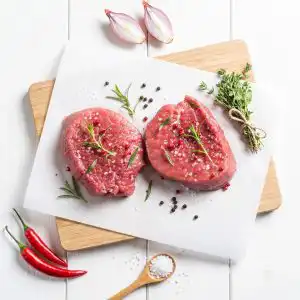
For an everyday premium steak night, our Grass Fed Beef Fillet Steak is the standard eye fillet experience — the tenderness and mild flavour described above, from grass-fed Australian beef.
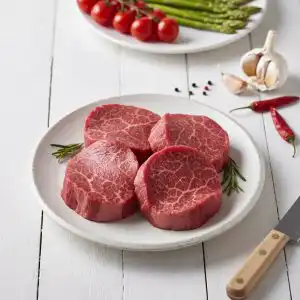
Indulge in the delicate flavour and buttery tenderness of our Wagyu Eye Fillet MB 8/9. With its high marble score of 8/9, this premium cut offers a velvety, melt-in-your-mouth texture that few steaks can match.
Each piece is vacuum packed to preserve peak freshness, making it perfect for pan-searing, grilling, or roasting whole. Whether for a celebration or an indulgent dinner, this Wagyu Eye Fillet delivers restaurant-quality luxury at home.
One is steak is upto and approx 250 grams
If you're cooking for something bigger — an anniversary, a proper dinner party — the Wagyu Eye Fillet MB 8/9 steps things up. The higher marble score adds a richness the standard cut doesn't naturally have, without losing any of that signature tenderness.
Eye fillet is beef tenderloin — the most tender cut on the animal, taken from a strip of muscle that runs along the backbone and does almost no work. It has a mild flavour compared to fattier cuts and is traditionally served with a sauce.
They're the same muscle, different portions. Filet mignon refers specifically to individual medallions sliced from the narrower tail end of the tenderloin, while eye fillet is the Australian term for the tenderloin generally, or the steaks cut from it.
Chateaubriand is a larger roasting portion cut from the thick centre of the tenderloin, meant to be carved tableside for two or more people. Filet mignon is a small individual medallion from the tail end of the same muscle. Same cut, different portion and purpose.
Cook it hot and fast to medium-rare (52-55°C internal), never past that point, and always rest it for at least five minutes before slicing. Never braise or slow-cook eye fillet — it has no fat or connective tissue to protect it, so low-and-slow methods just dry it out.
Eye fillet combines the highest tenderness on the animal with the lowest yield — only one narrow strip runs along the backbone of each animal. That combination of high demand and limited supply is what drives the premium price.
Eye fillet is beef tenderloin: the leanest, most tender cut on the animal, mild in flavour, and best paired with a good sauce. The one rule that matters more than any other is heat and timing — cook it hot, cook it fast, stop at medium-rare, and rest it properly. Get that right and you've got the best steak in the cabinet. Get it wrong and you've overpaid for a dry one.
Ready to try it yourself? Grab a fillet steak or step up to the wagyu above, and if you want the deeper comparisons, our scotch fillet vs eye fillet guide and scotch fillet vs ribeye guide go a level deeper on how eye fillet stacks up against the rest of the cabinet.

What a time for this blog. I love the BOGO offer to stock up.