
Quick answer: Scotch fillet and ribeye are the same primal cut — both come from the rib section of the beef, ribs 6 to 12. In Australia, "scotch fillet" is boneless and "ribeye" is bone-in. That's it. The naming is the opposite of American usage, which is where most of the confusion comes from. Choose scotch fillet for easier home cooking; choose ribeye or tomahawk when you want bone-in presentation at the BBQ.
You find yourself at the butcher counter. You're looking at a scotch fillet priced at $45/kg and a ribeye at $38/kg, and you ask why the boneless one costs more. The butcher tells you they're the same cut — the ribeye price includes the bone in the weight. That's the moment most Australians get it.
But the confusion runs deeper than one butcher conversation. American food content dominates Australian search results, and in the US, "ribeye" almost always means boneless. So Australians grow up reading American recipes raving about ribeye, then walk into a pub and see it on the menu for $55 — and assume it must be some premium cut they've been missing out on.
It isn't. This article covers exactly what separates scotch fillet, ribeye, and tomahawk, where the naming confusion comes from, and which cut you should actually buy.

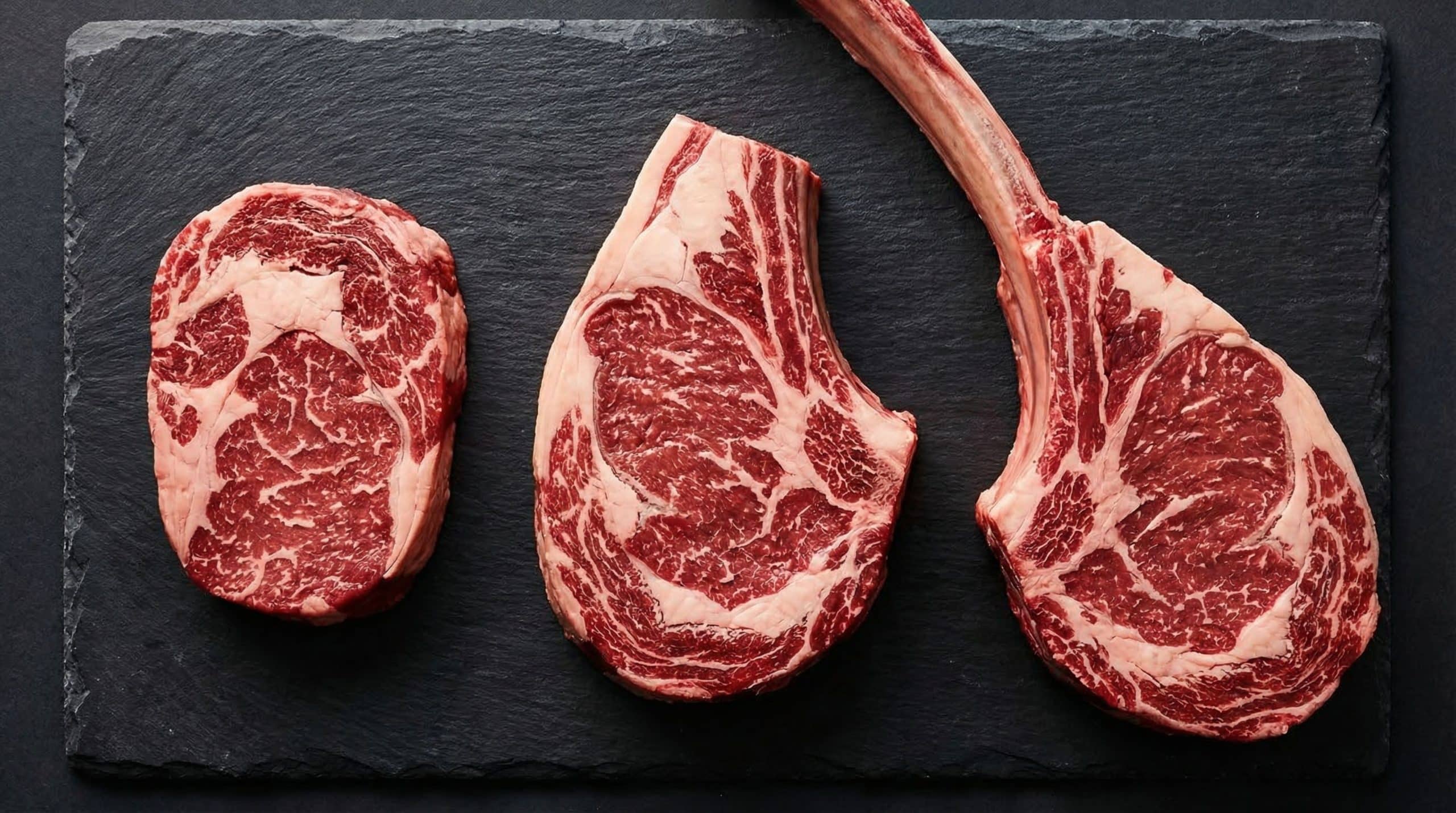
Yes — both scotch fillet and ribeye come from the same primal section of the beef carcass: the rib, specifically ribs 6 through 12. The same muscle, the same marbling potential, the same flavour profile. The only physical difference is whether the rib bone is left in or taken out.
The primary muscle in both cuts is the longissimus dorsi — a long muscle that runs down the back of the animal and does very little work, which is why it stays tender. Running along the top of it is the spinalis dorsi, often called the cap or fat cap, which is the most marbled and most flavourful part of the steak.
Whether the butcher leaves the rib bone attached or removes it doesn't change what's on your plate in terms of muscle structure. It changes the steak's shape, how it cooks, and how it looks on the table.
🔪 From the butcher: When I'm breaking down a rib primal, I'm making one decision: does the bone stay or come out? The meat I'm working with is identical either way. The spinalis cap is what people really taste — and that's the same cut regardless of what I leave attached. A good bone-in ribeye and a good scotch fillet from the same primal eat exactly the same if you cook them right.
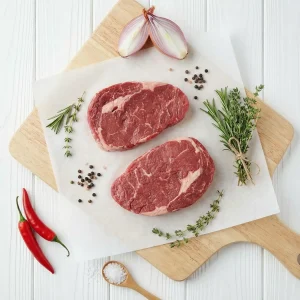
Scotch fillet is a boneless rib-eye steak. The rib bone is removed, the muscle is cleaned up, and the result is a neat, even steak with that distinctive marbled fat running through it. The name is essentially an Australian and New Zealand term — you won't find it on a menu in the UK, the US, or Europe.
The origin of the "scotch" in the name is debated. Some say it refers to a Scottish style of trimming; others say it was simply a regional term that stuck. What matters practically is that in any Australian or New Zealand butcher shop, "scotch fillet" means boneless rib eye.
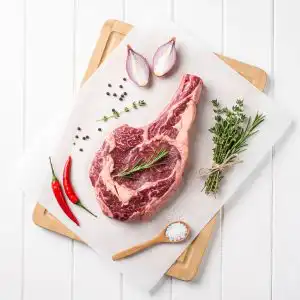
In Australian butcher shops, "ribeye" almost always means the bone-in version of the same cut. The rib bone is left attached, typically trimmed short, usually a few centimetres of bone extending from the eye of the steak.
That bone-in presentation is why ribeye looks more impressive at a restaurant, and why it sits at a higher price point on a pub menu. The meat is the same. You're paying for the bone, the look, and the cooking theatre.
In the United States, "ribeye" means boneless. The American ribeye is the direct equivalent of the Australian scotch fillet. If you want bone-in in the US, you ask for a "bone-in ribeye" or a "cowboy steak."
This is the precise inversion that causes so much confusion. Australian consumers read American food content — YouTube channels, recipe websites, food media — and hear constant praise for the ribeye as the ultimate steak. They come away thinking ribeye is a premium cut distinct from what they know. Then they walk into a pub and see "ribeye" on the menu for $20 more than the scotch fillet and assume they've found that premium product.
💡 Butcher's insight: The US naming convention confuses even experienced cooks here. When an American recipe says "get a good ribeye," they mean what we'd call a scotch fillet. If you're following an American recipe, buy scotch fillet and you're getting exactly what they intended. Don't chase a bone-in cut based on a US recipe's instructions.
This naming inversion doesn't just affect home cooks. It creates a genuine pricing asymmetry in Australian hospitality venues. Some pub menus list both "scotch fillet" and "ribeye" as separate items, implying they're different cuts with different quality levels — and price them accordingly. They are not different cuts.

The tomahawk is the same rib section cut as the scotch fillet and ribeye. The only difference is that the rib bone is left long — typically 30 to 45 centimetres — and frenched clean of meat so the bone is exposed and polished.
That long bone is purely a presentation feature. The steak you're eating is the same eye of rib with the same spinalis cap. Nothing about the long bone changes how the meat tastes. What it does is make a dramatic entrance on the table, which is exactly why restaurants charge a significant premium for it.
A full tomahawk typically weighs 600 grams to 1.2 kilograms, with a large portion of that weight being inedible bone. When you compare the cost per kilogram of actual meat, a tomahawk is expensive. When you're cooking for two on a Friday night and want something that feels like an event, it delivers.
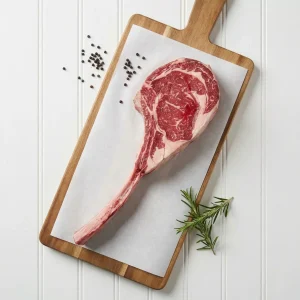
Shop: Pryde Butchery tomahawk and ribeye steaks — cut to order, delivered across Sydney, regional NSW, and the ACT. ·
Related reading: How to cook a tomahawk steak
This is the most common question when people find out that scotch fillet and ribeye are the same muscle. If you pay more for bone-in, you want to know if you're getting something different in the eating.
The honest answer: marginally, and not in the way most people expect.
The bone itself doesn't transfer flavour directly into the meat during cooking. Marrow doesn't migrate into a steak during a short, high-heat cook. What the bone does is slow down heat transfer on one side of the steak — the bone-side stays cooler during cooking, which creates a slightly different texture gradient in the meat immediately adjacent to the bone (Steak School by Stanbroke).
On a hot grill or cast-iron pan, the exposed bone surface also contributes to the Maillard reaction, creating some additional char and crust character near the bone. This is real, but subtle.
The bigger factor is simply the cut thickness. Bone-in steaks are often cut thicker than boneless scotch fillets — a 3 to 4 cm ribeye handles a reverse sear or indirect BBQ heat better than a thin boneless steak. If you're cooking a thick bone-in cut and a thin boneless cut, you'll taste more difference from the thickness than from the bone.
🔪 From the butcher: If someone asks whether bone-in "tastes better," I tell them: ask for the same steak, same thickness, same grade, one with bone and one without — and do a blind comparison. Most people can't tell the difference in the eating. The bone changes the cooking, not the flavour in any dramatic way. What makes a ribeye great is the marbling and the spinalis cap, not the bone.
The price difference between scotch fillet and ribeye on a pub menu comes down to two things: bone weight and presentation markup.
Bone weight: When you buy a bone-in ribeye priced per kilogram, a portion of that kilogram is inedible bone. A typical rib bone on a standard cut adds 150 to 250 grams of weight you won't eat. At $45/kg, that's roughly $7 to $11 you've paid for bone. Meat & Livestock Australia's beef cut specifications classify the cube roll (the primal the scotch fillet and ribeye are cut from) as a single primal whether bone-in or boneless — confirming they are the same cut by industry definition. At a good butcher, pricing should reflect actual eating weight, or at least be transparent about what you're getting.
Presentation markup: Restaurants and pubs charge for the experience of a bone-in steak on the plate. A ribeye arrives looking more impressive than a boneless scotch fillet. That presentation justifies a higher menu price, but it does not reflect a quality difference in the meat.
| Scotch Fillet | Ribeye (bone-in) | Tomahawk | |
|---|---|---|---|
| Bone | None | Short rib bone | Long frenched rib bone |
| Primal | Ribs 6–12 | Ribs 6–12 | Ribs 6–12 |
| Marbling | Identical to ribeye | Identical to scotch fillet | Identical |
| Best for | Home cooking, pan sear | BBQ, thick-cut grill | Special occasion, BBQ theatre |
| Ease of cooking | Easier (even heat) | Moderate | Moderate — needs space/time |
| Price per kg (typical AU) | ~$38–$55 | ~$40–$65 | ~$50–$80+ |
| Value per kg of meat eaten | Best | Moderate | Lowest |
The exception: some supermarkets price bone-in ribeye cheaper per kilogram than scotch fillet, because the bone dilutes the apparent price. Don't compare the sticker price — compare price per 100g of actual meat.
💡 Butcher's insight: When a customer wants to compare value, I always say: what's the price per gram of actual meat you're going to eat? Take the sticker price, figure out what percentage is bone, and recalculate. That's the real number. At Pryde Butchery, we price cuts honestly — you know exactly what you're getting.
The right answer depends on how you're cooking and what you're going for.
You're cooking for yourself on a weeknight — buy scotch fillet. It cooks evenly in a hot cast-iron pan, hits medium-rare reliably, and there's no bone to manage. A 250g to 300g scotch fillet, 2.5 to 3 cm thick, is the benchmark weeknight steak.
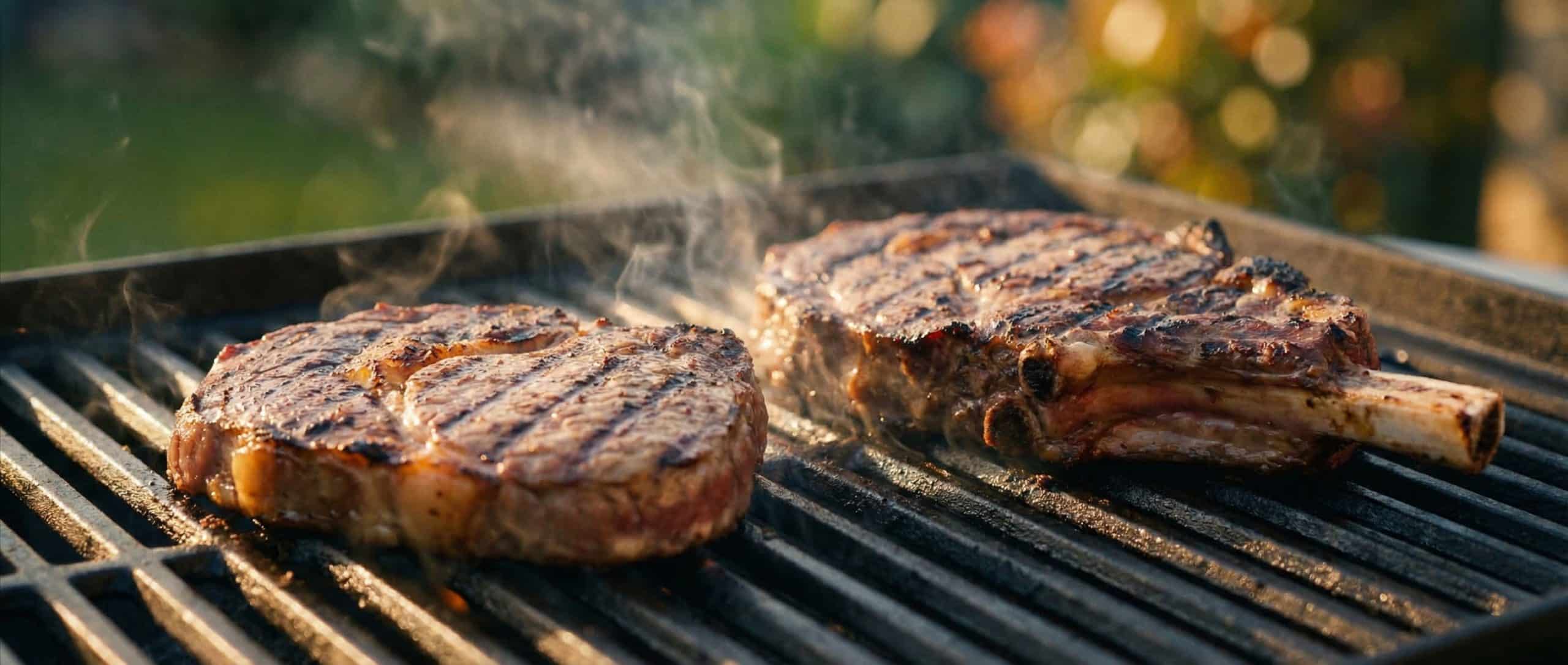
You're doing a weekend BBQ for guests — buy ribeye. Bone-in handles indirect BBQ heat well, it looks impressive on the grill, and the extra thickness means you've got more time to nail the cook. Pull it at an internal temperature of 52°C and rest it for 5 minutes.
You want a special occasion centrepiece — buy a tomahawk. One tomahawk feeds two comfortably. It's designed to look extraordinary on the table. Cook it indirectly on the BBQ until 48°C internal, then finish it over direct high heat. The result is a proper event.
You're watching value — buy scotch fillet. Same marbling, same muscle, same eating. You're not missing out on anything except the bone.
Shop our steak range: Scotch fillet · Ribeye · Tomahawk — order online from our Sutherland Shire butcher shop, delivered fresh across Sydney, NSW, and ACT. ·
Related reading: How to cook scotch fillet perfectly
Most butcher confusion comes from ordering by name when you should be ordering by what you need the steak to do.
Ask for thickness, not just the cut name. "Can I get a scotch fillet at around 3 cm?" tells a butcher exactly what you need. "One scotch fillet" might get you whatever thickness was pre-cut.
Ask about the marbling grade. A good butcher will tell you if the stock they have on the rack is well-marbled or more lean. Marbling varies by animal, feed program, and breed — grain-fed beef typically has more intramuscular fat than grass-fed, with grass-fed animals producing leaner, firmer steaks with cleaner, more mineral flavours. Wagyu crossbreeds marble more heavily than standard breeds regardless of the feed program.
Ask for it to be cut to weight. If you're cooking for a specific number of people and want consistent results, asking for a cut at 350g or 400g is completely normal. Any quality butcher can do this; supermarkets can't.
Don't worry about the name. Tell your butcher — whether in person or ordering from an online butcher — what you're cooking (BBQ, pan-sear, special occasion), how many people you're feeding, and roughly what you want to spend. They'll put the right thing in front of you.
🔪 From the butcher: The best steak conversations start with "what am I cooking tonight?" not "which cut is best?" Tell me you're doing a Sunday BBQ for four, you want bone-in, and you've got a budget in mind — and I'll sort you out. The name on the label is the least important thing on the counter.
Yes — in Australia. Both scotch fillet and ribeye come from the rib section of beef (ribs 6 to 12). The scotch fillet is boneless; the ribeye is bone-in. The underlying muscle, marbling potential, and flavour profile are identical. The name difference is about bone configuration, not cut quality.
It usually isn't, at face value — but you need to compare the right number. A bone-in ribeye includes 150 to 250 grams of inedible bone in its sale weight. When you calculate the price per 100g of actual meat, a bone-in ribeye often works out equal to or more expensive than a scotch fillet, not cheaper. Pubs charge more for ribeye because the bone-in presentation commands a premium on the plate.
Yes. In the US, "ribeye" almost always refers to the boneless cut — which is the direct equivalent of the Australian scotch fillet. American "bone-in ribeye" or "cowboy steak" is what Australians call a ribeye. If you're following an American recipe that calls for ribeye, buy scotch fillet.
In terms of the meat, there is no difference. A tomahawk is a bone-in ribeye with the rib bone left long — typically 30 to 45 centimetres — and frenched clean. The extended bone is a presentation feature only. The eating experience is identical to a standard bone-in ribeye. Tomahawks carry a higher price because of their impressive appearance and because the long bone adds to the sale weight.
Neither. Marbling is determined by the individual animal, its breed, and how it was raised and fed — not by whether the rib bone was removed. A well-marbled scotch fillet and a well-marbled ribeye from the same animal will have identical intramuscular fat content. If you want maximum marbling, ask your butcher about grain-fed stock or Wagyu crossbreeds, not about which cut to choose.
Yes — that's a ribeye, and any butcher can cut it for you. If you want the long-bone tomahawk presentation, ask for a tomahawk cut. Most butchers will also cut to your preferred thickness and weight if you ask. That level of service is what distinguishes a proper butcher from buying pre-cut from a supermarket shelf.
Scotch fillet, ribeye, and tomahawk all come from the same part of the same animal. The cut is the rib primal — ribs 6 to 12, the longissimus dorsi muscle with the spinalis cap. What you're choosing when you pick between them is bone configuration, not quality tier.
| Scotch Fillet | Ribeye | Tomahawk | |
|---|---|---|---|
| Same muscle | ✓ | ✓ | ✓ |
| Same marbling | ✓ | ✓ | ✓ |
| Boneless | ✓ | ✗ | ✗ |
| Best for home cook | ✓ | — | — |
| Best for BBQ | — | ✓ | ✓ |
| Best for presentation | — | ✓ | ✓✓ |
| Best value per kg eaten | ✓ | — | — |
Buy scotch fillet for easy, reliable home cooking. Buy ribeye or tomahawk when you want the visual impact and the bone-in BBQ experience. Don't pay a pub premium thinking you're getting something the supermarket doesn't sell — you're buying the same cut, dressed differently.
🔪 Written by Dav, head butcher at Pryde Butchery. Dav has been breaking down beef primals from our Sutherland Shire shop for years — cutting scotch fillets, ribeyes, and tomahawks to order every week. If you've got a question about a cut, ask us directly.
