You've probably stood at your stove, watching a beautiful Scotch fillet turn from promising to overcooked in what felt like seconds. I've been there too, and I learned the hard way that nailing a perfect steak isn't about fancy techniques, it's about mastering a few critical steps. The difference between a restaurant-quality piece and a chewy disappointment comes down to temperature control, timing, and one essential resting period that most people skip.
Let steak sit at room temperature for 30-60 minutes and pat dry before seasoning generously with salt and pepper.
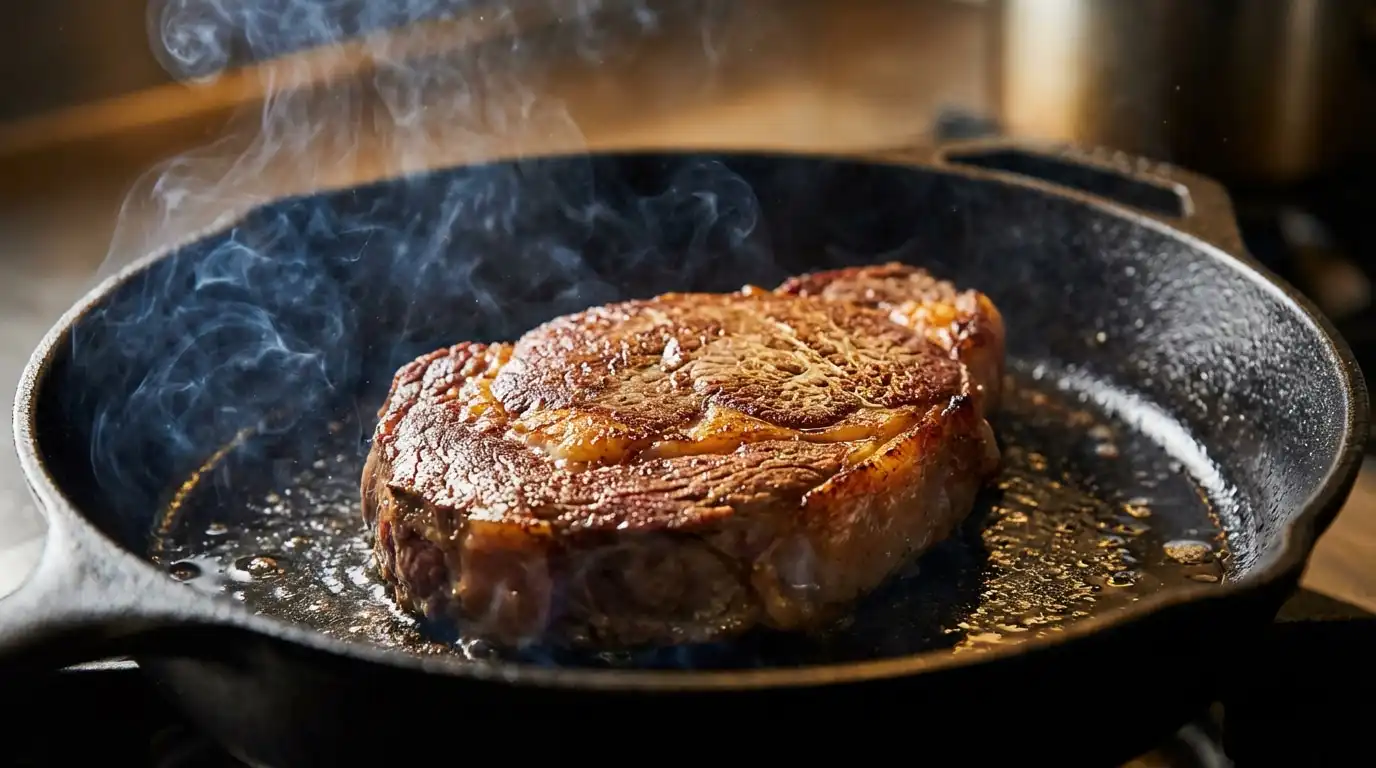
Preheat pan to 200°C until smoking, then sear steak undisturbed for 2-4 minutes per side for a golden crust.
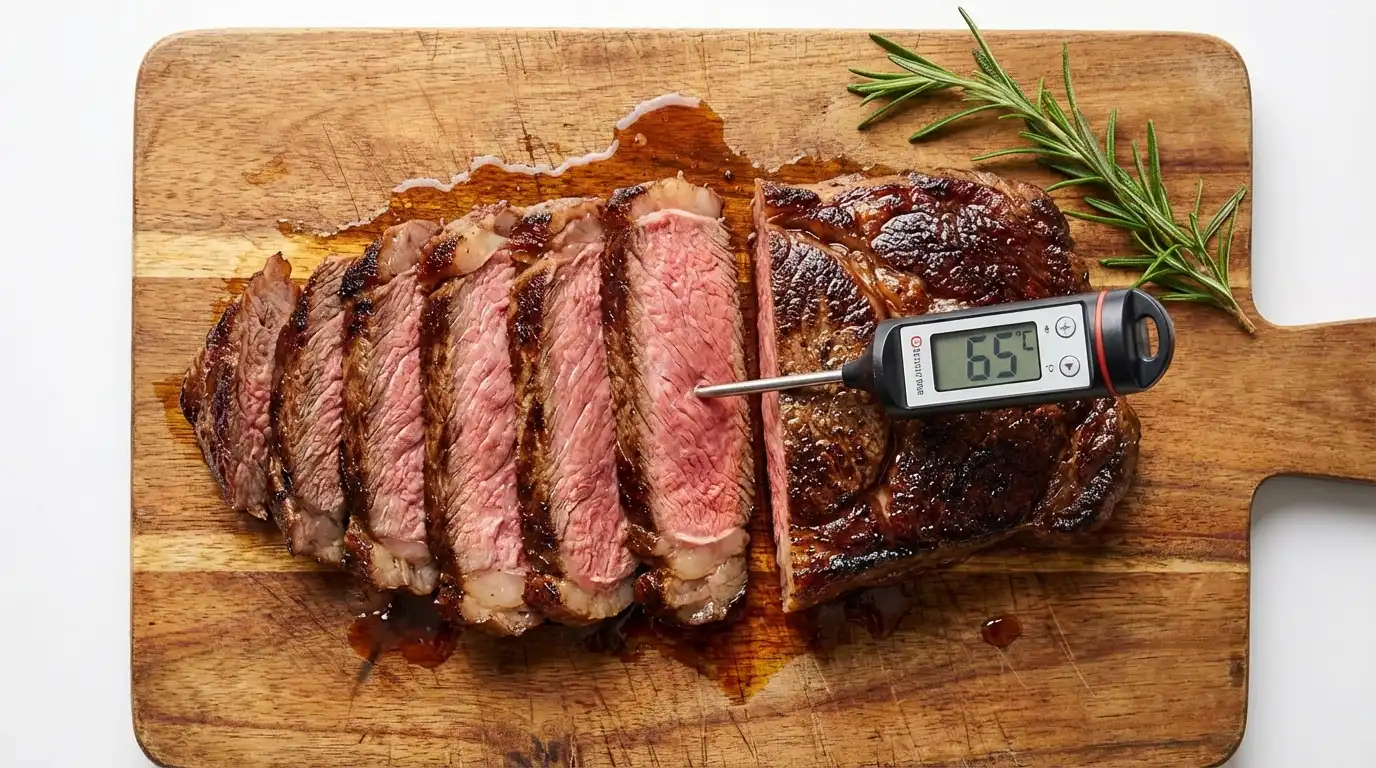
For medium-rare doneness, cook until internal temperature reaches 65°C, accounting for 3°C carryover heat during resting.
Rest steak for 5-10 minutes after cooking to redistribute juices and ensure maximum tenderness and flavor.
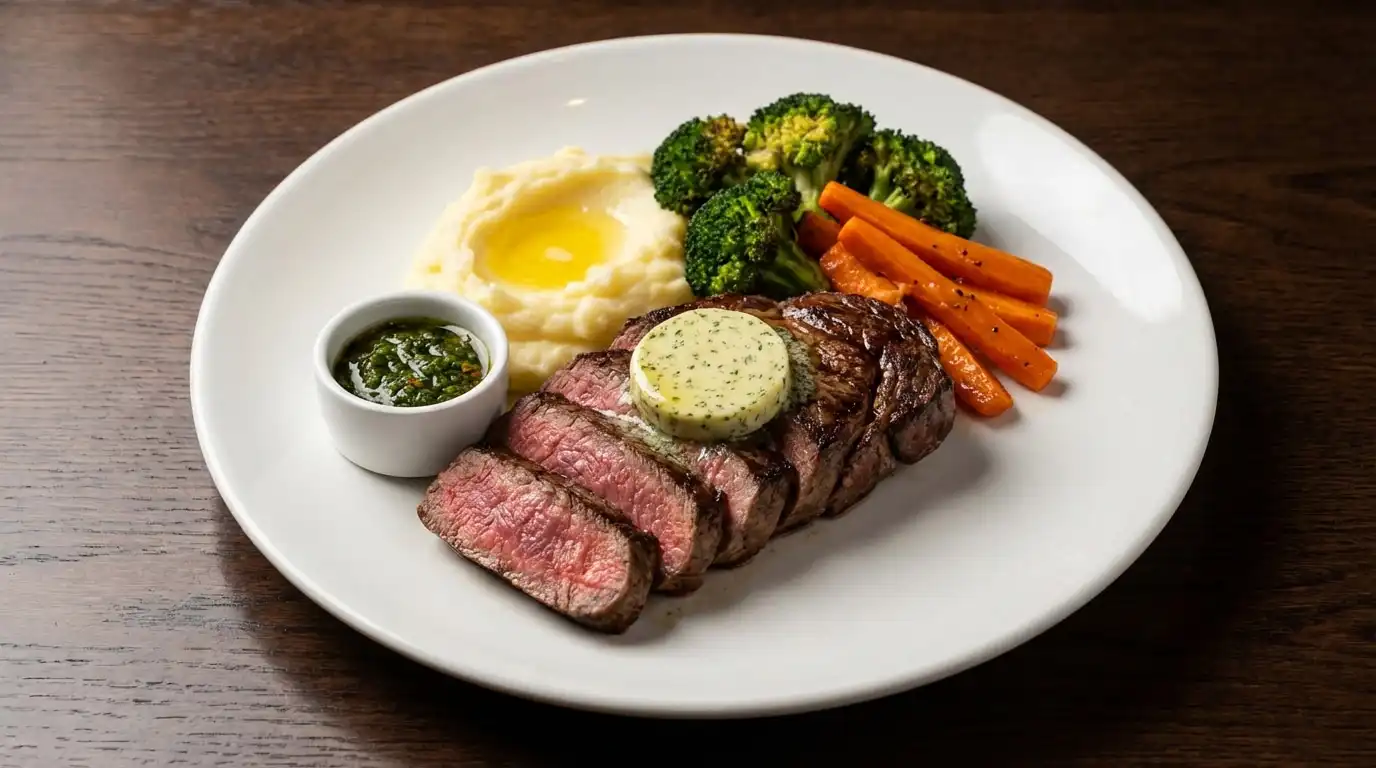
Finish with herb-infused butter and lemon juice, then pair with sides like mashed potatoes and roasted vegetables.
Before you even think about turning on the stove, you need to get your scotch fillet ready, and trust me, this prep work makes all the difference between a restaurant-quality steak and one that's just okay.
First, pull your scotch fillet steak from the fridge and let the steak sit at room temperature for 30-60 minutes—this guarantees it cooks evenly throughout.
While waiting, grab a paper towel and pat it completely dry, removing any moisture that'll prevent that gorgeous sear you're after.
Next, season both sides generously with salt and pepper, letting those flavors sink in.
Finally, trim off any excessive fat with a sharp knife, but keep some marbling intact for flavor and juiciness.
Get everything organized now, because once you start cooking, there's no turning back.
Ready to transform your perfectly prepped scotch fillet into a steakhouse-worthy masterpiece? First, preheat your pan until it's lightly smoking—we're talking 200°C or 400°F here.
I've learned the hard way that patience pays off during this step. Add a dash of oil, then carefully place your steak in the pan.
Now comes the tough part: resist the urge to fiddle with it. Let it sear undisturbed for 2-4 minutes per side, allowing that gorgeous golden-brown crust to develop.
This high-heat searing locks in moisture, creating an incredibly juicy steak. Flip it once, cook the other side, then let it rest for 5-10 minutes.
Trust me, those resting minutes make all the difference in redistributing the juices throughout.
Getting that perfect medium-rare doneness isn't just about throwing your steak on the grill and hoping for the best—it's about precision, and honestly, I've overcooked my fair share of beautiful scotch fillets before I figured this out.
For a 1-inch thick steak, you'll want a cooking time of 4 minutes on the first side and 3 minutes on the second.
Here's the vital part: pull your steak off the heat when the internal temperature hits 65°C (149°F). Use a meat thermometer, because guessing never works in your favor.
The steak will continue cooking while it rests, rising another 3°C from carryover heat.
Let it rest for at least 5 minutes—this locks in those precious juices you worked so hard to preserve.
The moment you pull that beautifully seared scotch fillet off the heat is when patience becomes your best friend, and I'll admit, I used to slice right into mine because I couldn't wait—big mistake.
Resting your steak for 5-10 minutes lets all those juices redistribute instead of spilling onto your cutting board. Cover it loosely with foil to keep it warm without steaming.
Here's where it gets really good: melt a tablespoon of butter with thyme or rosemary, then spoon that butter over the steak for about 30 seconds.
The richness is incredible, but add a subtle squeeze of lemon juice to brighten everything up. Trust me, this finishing touch transforms a great steak into something restaurant-worthy.
After all that work getting your scotch fillet cooked to perfection, you'll want sides that pull their weight on the plate, and honestly, I've learned this the hard way after serving beautiful steaks with boring, forgettable vegetables.
Creamy mashed potatoes or potato dauphinoise bring that comforting richness your perfectly cooked steak deserves.
I always add roasted broccoli and brown sugar glazed carrots for color and sweetness, they make the plate look restaurant-quality.
A fresh garden salad with tangy vinaigrette cuts through all that richness beautifully.
For something special, whip up chimichurri sauce for a zesty kick, or go full luxury with Bérnaise sauce and Paris Mash.
Your steak worked hard to be delicious, give it sides worth remembering.
You've got all the tools now to cook a Scotch fillet that'll impress anyone at your table. I've burned my share of steaks learning these tricks, so trust me when I say following these steps makes all the difference. Don't skip the resting part, even though you'll be tempted. Get that pan hot, watch your temps, and you'll nail it every time.