
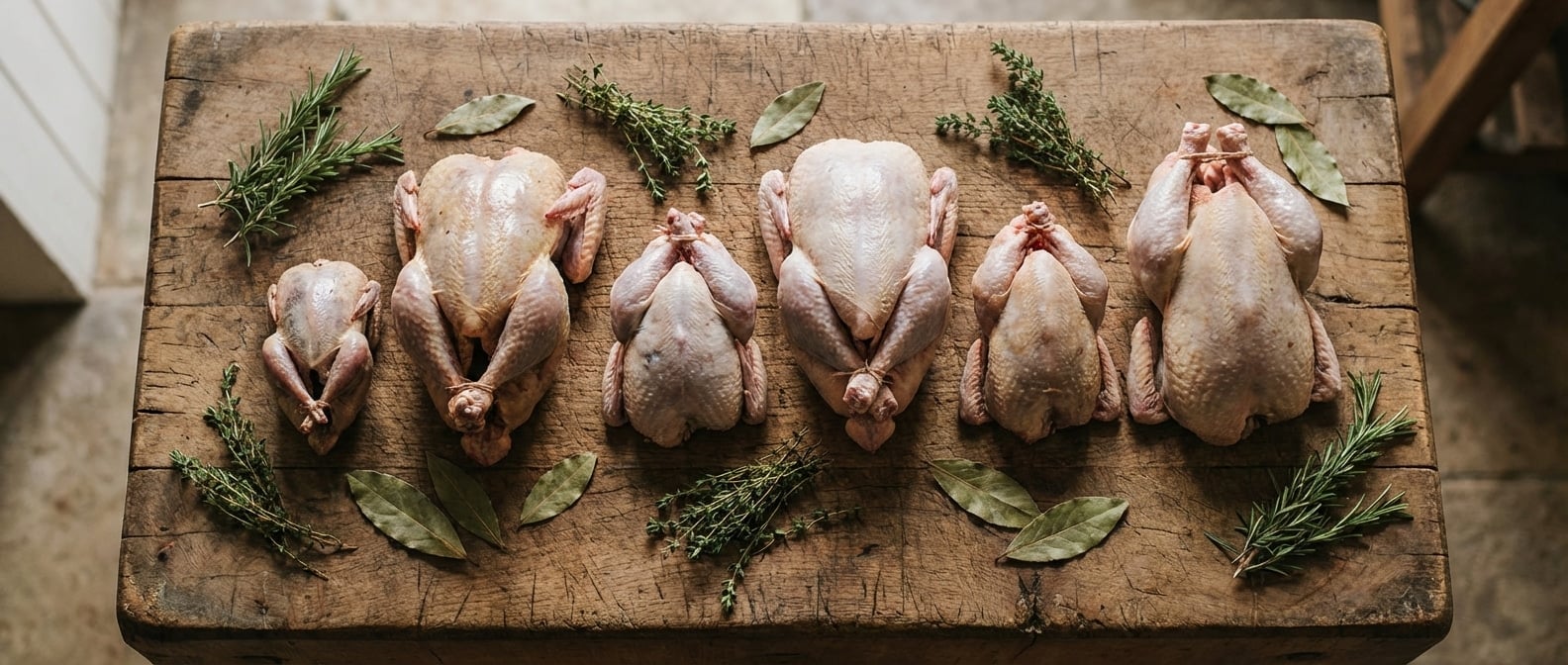
Australia's game bird industry is worth more than AU$32 million annually (Poultry Hub Australia, citing AgriFutures Australia research) — and most of that demand passes through specialty butchers, not supermarkets. If you've been curious about what's behind the counter beyond standard chicken, this guide covers every commercially available species: what they taste like, when they're available, and how to pick the best one at the counter.
TL;DR: Six game bird species are commercially available from Australian butchers: quail, pheasant, squab, guinea fowl, partridge, and goose. Quail is the easiest to find year-round. Pheasant, partridge, and goose peak in autumn–winter. All butcher-sold birds are farmed stock — not wild-caught — and typically cost 3–5× more per kilogram than standard chicken.
The six game birds at a glance:
| Bird | Flavour profile | Availability |
|---|---|---|
| Quail | Mild, slightly sweet | Year-round |
| Pheasant | Earthy, classic gaminess | Autumn–winter peak |
| Squab (pigeon) | Rich, deep, red-fleshed | Year-round |
| Guinea fowl | Mild gaminess, firmer than chicken | Christmas/Easter peak |
| Partridge | Delicate, fine dining | Advance order required |
| Goose | Rich, fatty, festive | Christmas; advance order |
Six species are classified as commercial game birds in Australia, and all stock sold through butchers is farmed, not wild-caught (Poultry Hub Australia, citing AgriFutures Australia). This matters because harvesting native Australian bird species is tightly regulated, and none of the birds you'll find at a butcher's is indigenous.
What separates game birds from standard poultry comes down to three things: flavour, texture, and price.
Flavour and texture. Game birds are leaner than commercial chicken. More developed muscle tissue produces darker, more pronounced meat. The degree of gaminess varies considerably: quail and guinea fowl are the mildest; squab and pheasant are the most intense.
Price. Game birds command a significant premium over standard poultry. Production volumes are far lower, farming is more specialised, and demand concentrates around festive periods. Most species cost 3–5× as much per kilogram as chicken at a butcher.
The chart below compares each species' estimated annual industry value — a useful indicator of both the scale of production and the relative demand for each bird.
Quail is Australia's dominant game bird, with approximately 6.5 million birds processed annually (Poultry Hub Australia / AgriFutures Australia), making it the easiest game bird to find at a butcher year-round. One producer holds 75–80% of the domestic market, which explains both the consistent supply and the relatively stable pricing compared to other species.
Flavour: mild and slightly sweeter than chicken, with lean dark meat throughout. It's the most approachable game bird for first-time buyers — noticeably more flavourful than chicken, but without the pronounced gaminess of pheasant or squab.
Cuts available: whole bird, spatchcock (backbone removed and opened flat for even grilling), boneless breast, and sometimes eggs. Most butchers stock whole birds as standard.
Cooking methods: quail responds well to fast, high-heat cooking. Pan-searing takes 3–4 minutes per side; spatchcock on the grill takes 8–12 minutes. Whole birds roasted at 200°C take around 15–18 minutes. Because the birds are small, overcooking is the main risk — pull them when the juices run clear.
Buying tip: look for a plump breast, tight skin with no visible bruising, and a neutral smell. Avoid birds with wet patches or discolouration on the skin.
Many butchers that stock quail also carry quail eggs, typically in packs of 12 or 24. They're roughly one-third the size of a hen's egg, with a higher yolk-to-white ratio, delivering a noticeably richer flavour. Common uses include soft-boiling as a canapé base, pickling as a garnish, or curing in soy for an Asian-inspired dish.
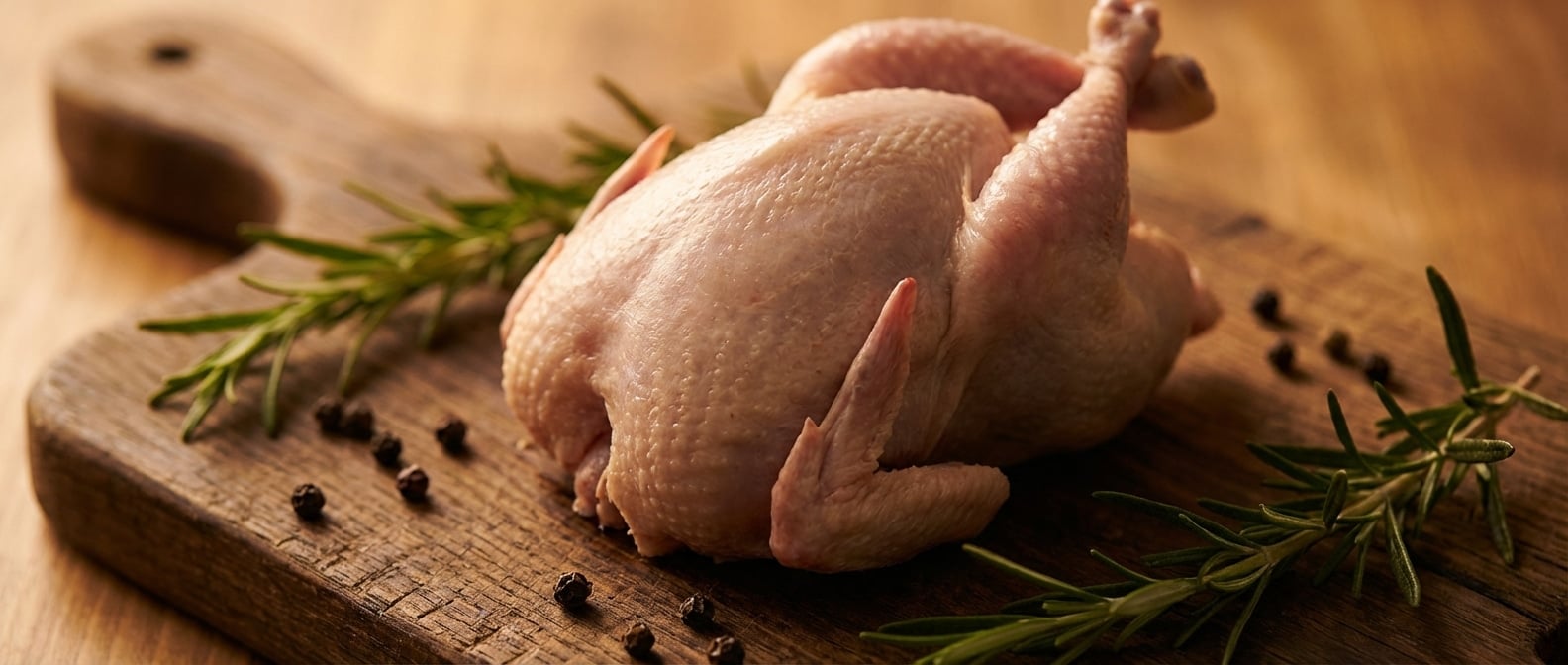
Pheasant is the bird most associated with game dining globally, and it's available at Australian specialty butchers primarily from autumn through winter, with demand peaking at Christmas and Easter (AgriFutures Australia). Approximately 60,000 pheasants are processed annually in Australia (Poultry Hub Australia) — far fewer than quail, but more reliably available than partridge.
Flavour: richer and earthier than chicken, with a slight gaminess that mellows with proper resting after cooking. The meat is lean, which produces a firmer texture than chicken.
Cuts available: whole bird, crown (breast on the bone), legs, and breasts. Whole birds are the most common offering at specialty butchers.
One preparation note worth knowing: pheasant has low natural moisture content. Brining the whole bird overnight — roughly 50g salt per litre of water — or barding the breast with thin bacon before roasting prevents the meat from drying out. This step is not complicated, but skipping it is the most common mistake new pheasant cooks make.
Seasonal availability: autumn and winter are the reliable windows at most butchers. In summer, phone ahead or place an advance order. Larger specialist butchers can often source pheasant year-round with lead time.
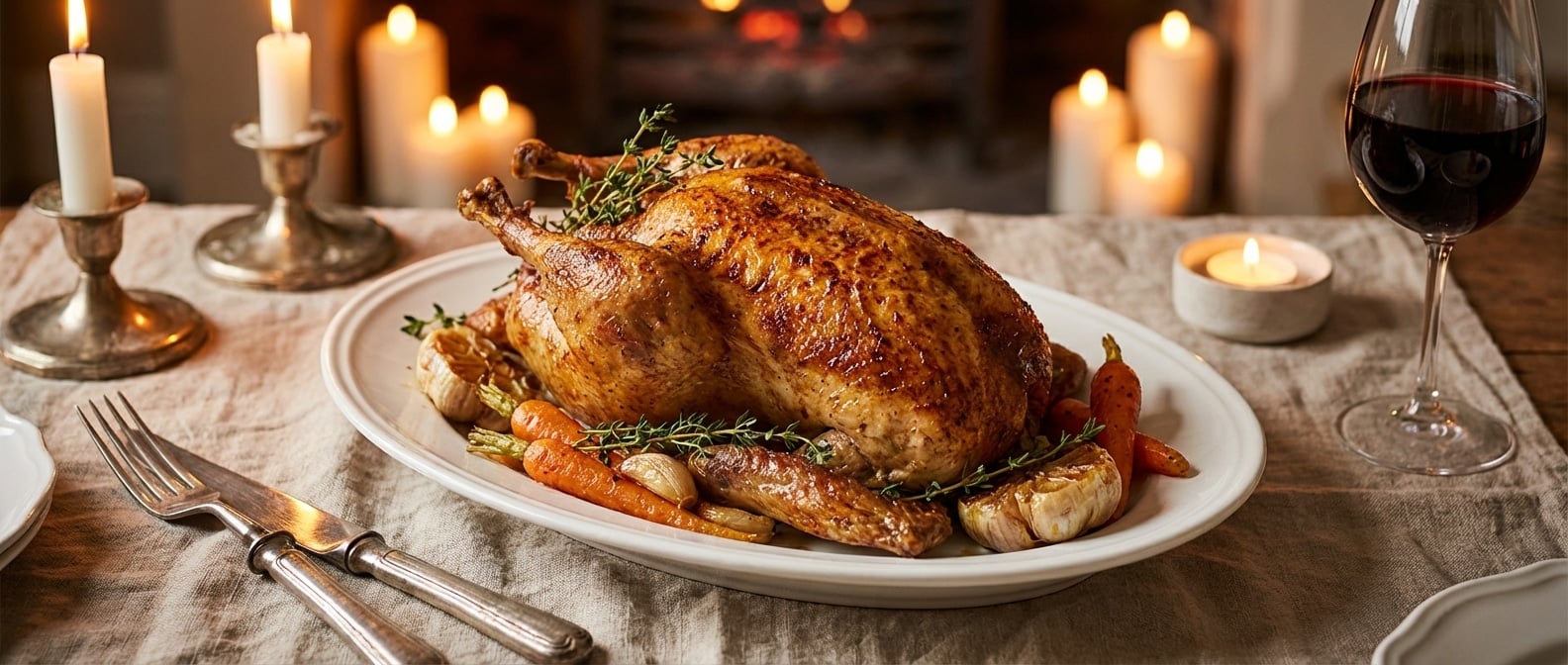
Squab is young domestic pigeon, slaughtered between 24 and 28 days old before it fledges. Australia's squab industry has roughly doubled in value over two decades — from AU$6.2 million in 2002 to approximately AU$11 million today (Poultry Hub Australia, citing AgriFutures Australia) — driven almost entirely by restaurant demand for its distinctive red meat.
Flavour: the richest and most intense of the six game birds. Squab has deep red flesh throughout — not just in the legs, as with chicken — because the bird's breast muscles are constantly active. The flavour is often compared to a more complex version of duck. It is not subtle.
Cuts: whole bird is the standard commercial offering. Some specialty suppliers carry breast portions separately, but whole birds are far more common. The carcass also makes an exceptional dark stock.
Availability: more consistent than pheasant or partridge. Because squab is slaughtered young and breeding farms run multiple cycles per year, supply fluctuates less with season than festive-peak birds.
Counter tip: ask for "squab" rather than "pigeon" at the butcher counter — specialty butchers stock the farmed, dressed product under the former name. Wild pigeon is a different and far less available product.
Guinea fowl bridges the gap between chicken and pheasant — it has more flavour than standard poultry but milder gaminess than most game birds, making it the most accessible entry point for anyone cooking game for the first time. Fewer than 40,000 birds are processed in Australia each year, yet the industry is valued at approximately AU$6.2 million (Poultry Hub Australia) — a figure that reflects the high per-unit price this species commands.
Flavour: mild gaminess, a firmer texture than chicken, and a slightly drier breast. The legs and thighs carry excellent flavour and respond particularly well to braising or pot-roasting.
Cuts: whole bird and portions (legs, breast). Whole birds are the most common offering. Portions may need to be requested specifically — ask your butcher when you call ahead.
Seasonal availability: guinea fowl peaks at Christmas and Easter. Stock moves quickly in those periods, so confirm availability in advance. A phone call a week out is usually sufficient — though two weeks is safer for the festive window.
Cooking: guinea fowl responds to similar techniques as chicken — roasting, braising, and pot-roasting all work well. One important adjustment: because the breast is leaner, it cooks slightly faster than chicken breast. Pull the breast meat at 74°C internal temperature to avoid drying it out.
Value: Guinea fowl is typically priced between chicken and pheasant per kilogram, making it a cost-effective way to explore game bird cooking without committing to a more expensive species.
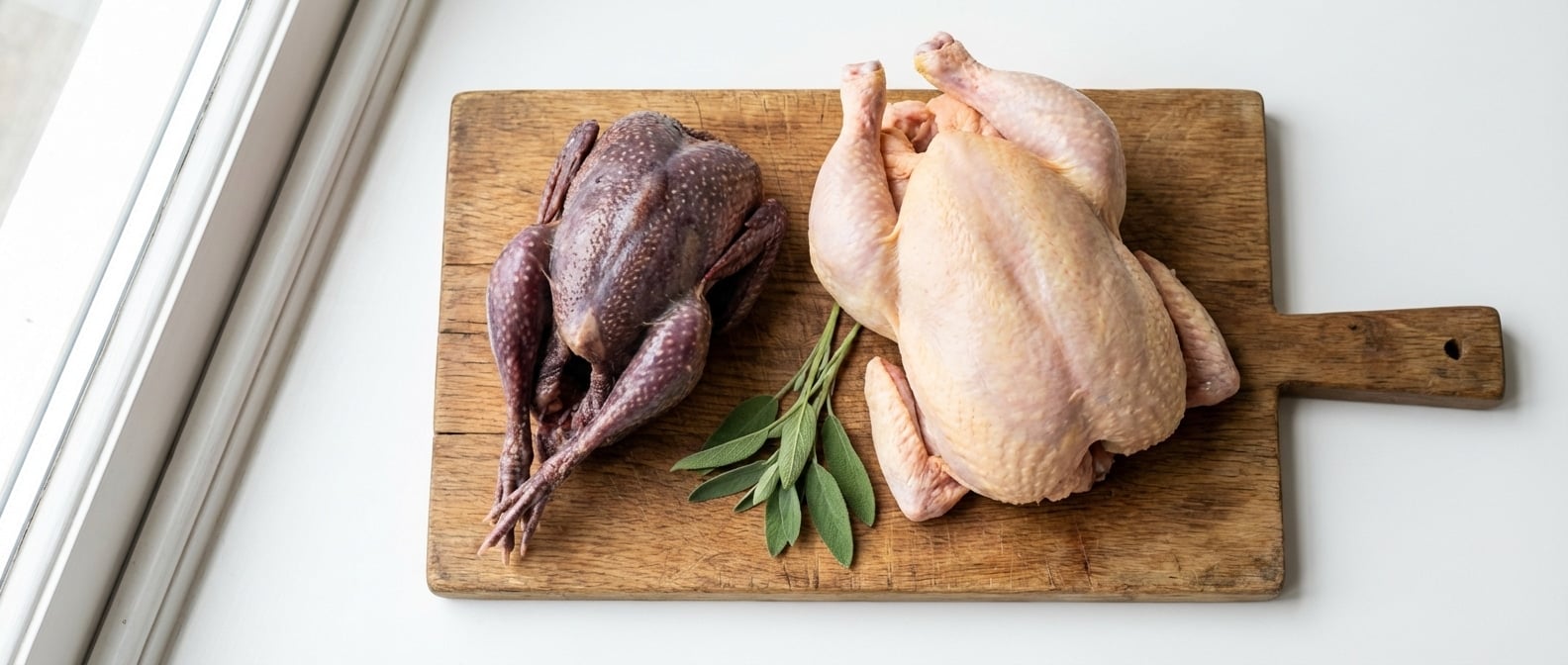
Partridge and goose are the most specialist of the six game birds. Both typically require advance ordering from your butcher, as supply is extremely limited and demand concentrates heavily around the festive season.
Partridge: a small, delicate bird — one whole partridge provides a generous single serving. The flavour is the closest to pheasant among the smaller birds: mild, slightly sweet, with a fine-grained texture. Partridge production in Australia is so limited that aggregate industry data isn't reliably collected (Poultry Hub Australia). A single Victorian producer raises approximately 2,000 birds per year. Expect to pay a premium and plan well ahead.
Goose: the richest of the six birds by fat content. A dressed whole goose weighs 4–6 kg, making it a centrepiece rather than a weeknight option. The fat that renders during cooking is a prized by-product — save it for roasting potatoes or vegetables. Goose is Australia's most seasonal game bird; commercial production outside the Christmas and festive period window is negligible.
As a general guide, contact your butcher 2–4 weeks before any peak date: Christmas Day, Easter, or the Mother's Day long weekend. For partridge and goose specifically, the earlier the better — smaller producers often take orders months in advance for the Christmas window.
Online specialty butchers accept pre-orders with national temperature-controlled delivery, which can simplify sourcing if your local butcher doesn't regularly carry these birds. Check current availability and lead times directly with your supplier.
Unlike supermarket poultry, game birds at a butcher's let you assess quality directly before you buy. Knowing what to look for ensures you get the best flavour and a safe product.
Colour: each species has a characteristic flesh colour when fresh. Quail is pale pink; squab is deep red throughout; pheasant and guinea fowl sit between the two. Grey patches or discolouration on the flesh or skin are a sign of age or poor cold-chain handling.
Smell: Fresh game birds have a neutral to very faintly gamey scent. Anything sour, ammonia-like, or pungently strong is a clear reason to pass.
Skin condition: the skin should be tight, intact, and relatively dry. Excessive moisture pooling in the packaging or around the cavity often indicates poor storage temperature or extended time post-slaughter.
Ask about sourcing: all commercially sold game birds in Australia are farmed, not wild. However, some farms prioritise animal welfare and flavour-optimised feed. If provenance matters to you, ask your butcher — most are happy to share.
Storage at home: refrigerate and use within 2–3 days of purchase. For longer storage, freeze in airtight packaging for up to 6 months. Game birds freeze well due to their low fat content.
Preparation services: most butchers will spatchcock, portion, or bone out game birds on request. Ask when you order or call ahead — this saves significant time in the kitchen and costs little or nothing extra.
What game birds are available in Australia?
Six species are commercially farmed and available from Australian butchers: quail, pheasant, squab (pigeon), guinea fowl, partridge, and goose. All stock sold at butchers is farmed, not wild-caught. Quail is the most widely available year-round, with approximately 6.5 million birds processed annually across Australia (Poultry Hub Australia / AgriFutures Australia).
Are game birds more expensive than chicken?
Yes. Game birds typically cost 3–5× as much per kilogram as standard chicken, depending on the species. Lower production volumes, specialist farming requirements, and festive-season demand spikes all contribute to the price premium. Quail is the most affordable entry point; partridge and goose are the most expensive.
When are game birds in season in Australia?
Quail and squab are available year-round from most specialty butchers. Pheasant, partridge, and goose peak in autumn–winter and around Christmas and Easter. Guinea fowl follows a similar seasonal pattern to pheasant. For any bird outside its peak window, call your butcher ahead to confirm current stock before making a trip.
What does pheasant taste like?
Pheasant is richer and earthier than chicken, with a slight gaminess that mellows after cooking and resting. The meat is leaner than chicken with a firmer texture. It benefits from brining overnight before cooking to prevent the breast from drying out during roasting — a simple step that significantly improves the result.
Can I buy game birds online in Australia?
Yes. Specialty online butchers ship game birds nationally with temperature-controlled packaging to ensure safe delivery. Local butchers may also stock game birds or can order them in with advance notice — typically 2–4 weeks for rarer species such as partridge and goose. Check online availability before assuming your local butcher can source a particular bird at short notice.
Australia's six commercially available game birds cover a wide range of flavours, price points, and occasions. Quail and squab suit year-round cooking and are the easiest to find at a specialty butcher without advance planning. Pheasant and guinea fowl are natural choices for seasonal dinners where you want more complexity than standard poultry. Partridge and goose reward planning — their rarity is part of the appeal.
Whether you're buying your first quail or sourcing a Christmas goose, the most practical step is to speak with your butcher directly. They'll confirm what's in stock, what requires ordering ahead, and what lead time you need for any upcoming event.
Browse Pryde Butchery's game bird range online, or contact the team to check current availability and seasonal lead times.
Availability and pricing information accurate as of March 2026. Contact your butcher for current stock.
