
One of the questions I get asked a lot when serving our Customers in-store is how long to cook various meat cuts and particularly those that need long cooking for maximum tenderness.
As a semi-professional chef, I've had some experience in this area, so I thought it would be a good opportunity to write about slow cooking methods concisely and straightforwardly , just as we do when speaking with customers in person. As I started to write this I found that I could not cover all the types of meats in one single post so will be breaking this down into various posts with a focus on each cut.
While there is quite a bit of science behind this (and if you are a geek like me, it can be pretty fascinating), the quick and easy answer is that the meat needs to be held between 71°C to 93°C for several hours to become fork tender.
Now, at this stage, I could just have ChatGPT write how to cook various meats, but let's go with my own experiences here.
Yep, I have been there many times when doing a catering job, and I checked the meat towards the end of the cooking time and found it was not tender - then panicked. Will it be ready in time to serve everyone - Patience is the key - and don't keep opening the oven.
Many a time, I've come back an hour later, and there has been a huge transformation, and the previously tough pieces of meat have become luscious and tender. It is all about some planning and patience (which I'm never good at)
So, before I go over the various types of meats, I wanted to discuss a common issue we get at the shop, which is when a customer buys a cut of meat that must be slow-cooked and wants to cook it quickly. Part of the conversation we have when someone is purchasing a cut of meat and is unsure of the cooking time is to find out what they plan to make. We really don't want to sell you a cut of beef or lamb that requires slow cooking, and you want to prepare dinner in 30 minutes. You will end up with really tough meat and never want to buy from us again.

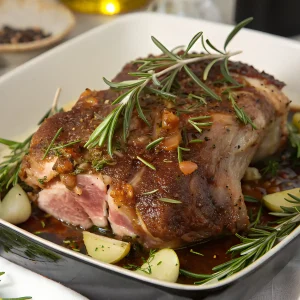
This is one of the most popular cuts of lamb we sell throughout the year, and we offer it either plain or in our homemade Greek-style marinade, which features an overabundance of rosemary, lemon zest, and olive oil. My preferred method of cooking this is to cover it with foil in the oven at 180°C for a minimum of 3 hours, at the 2:30min mark you can take the foil off if you want (depending on your oven, you may find this isn't needed). Then remove and rest it for at least 30 minutes, and I cannot stress the resting time here. Cover it with a piece of foil, and it will be still be nice and hot for serving. During this time, the meat will relax, and all the juices will settle.
Don't bother trying to carve this; just pull the bone out, and it will break it up. Now, I will be very honest here: lamb shoulder is a very fatty cut of meat, so there will be a lot of fat in the juices, and there is a pocket of fat in the middle (we as butchers can't really remove this unless you ask for it to be deboned so you have a boneless lamb shoulder). If you have cooked it long enough, this will have melted away, but please be aware that this does not mean it's a bad lamb shoulder; it's just a natural part of the cut.
A tip here is to use a fat strainer, remove the fat and use those juices for the best gravy ever.
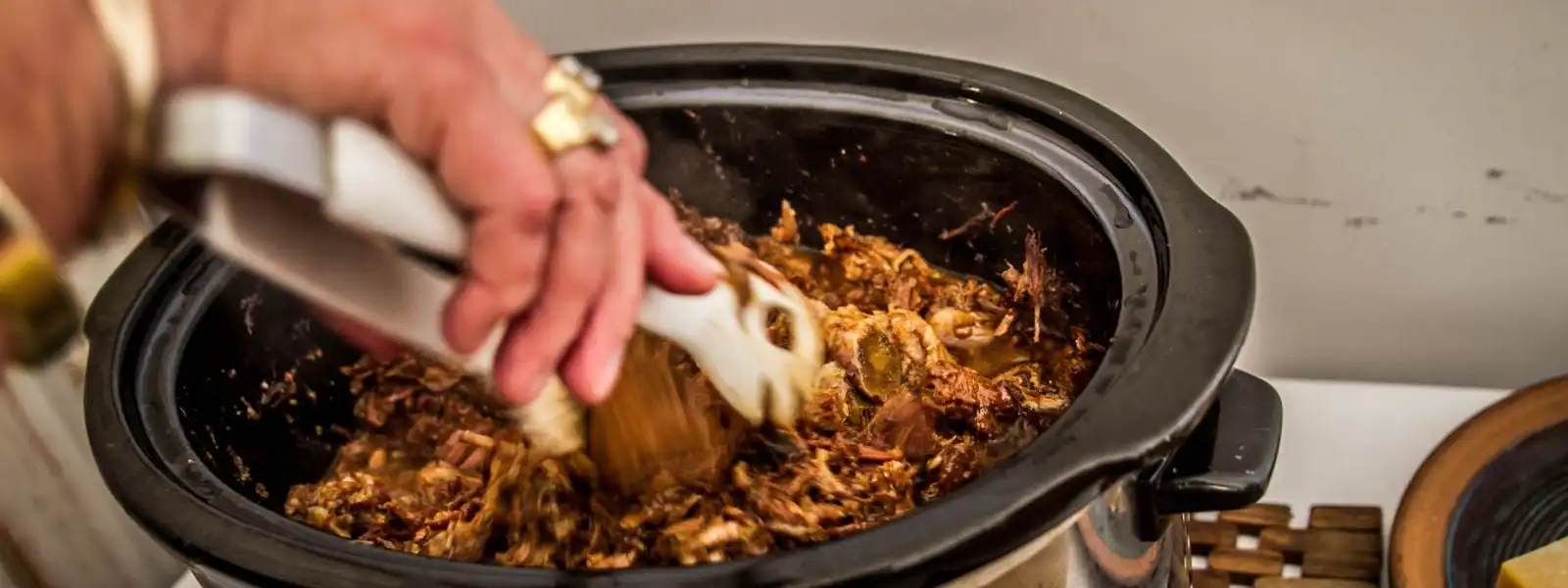
I cook this commercially all the time, and it is always a huge success. While it is possible to cook this in a pressure cooker, I would not recommend it as a lot of the flavour develops during the oven-roasting process and as this can be quite a fatty cut of meat your will be steaming alot of that fat which is just not appealling.
Many of our customers do cook this in a slow cooker with great results. A couple of tips for slow cooker lamb shoulder is to make sure you do give it cooking for plenty of time, like a good 8 hours on low to make sure it comes out tender, and add just a splash of water.
During the summer months you can cook lamb shoulder on the BBQ if you have the time. Best results are to wrapped the shoulder tightly in foil for at least the first two hours and then keep a careful eye on the temperature. With a little adjusting you will get it to around 180c and you will be good to go. Just don't keep opening the lid as you will lose all the heat. For something very similar and alot less cooking time you can get the butterflied leg of lamb and we often do this at christmas with the lamb on the BBQ as the oven is busy with the Pork Roast.
Now that I've given what I consider the minimum time and fastest way to cook Lamb Shoulder you have alot of options by extending the cooking time and dropping the temperature. The magic formula here is that internal temperature reaches at least 160°F (71°C) and up to 195°F (90°C) for optimal tenderness. A meat thermometer is a handy tool here.
There are many places/recipes that do 7-hour to 12-hour slow-cooked lamb, and they will all be sensational, I encourage you to try them all. These guidelines are a bare minimum so that you will have a great experience with easy-to-use instructions.

I grew up on a farm on the coast, and fishing was a big part of our life and the best way to guarantee we would catch fish on a trip out was for Mum to plan a roast lamb dinner. It would go in during the day for long slow cook, but fresh-caught snapper (our local fish) always took priority. So hmm, roast lamb in the oven or fresh fish? Mum would just turn off the oven and leave it slowly cooling down overnight and the next day the cold cuts were just the best. The lesson here is don't be scared to slow the oven down and let it cook more. Don't be afraid to get a roast larger than you need for dinner as leftover lamb meat makes amazing sandwiches or lamb wrap, so you want to have plenty of lamb to start with.
Some may find the smell of roasting lamb a bit on the nose, and my mum had the best tip ever. Just add a few sprigs of rosemary onto the top (we had an extensive garden and always had rosemary). It will just leave you with a wonderful, welcoming aroma.
I was trying to find an Italian Style for lamb roast for a themed dinner and discovered this lamb recipe from Venice. It turned out to be one of the most flavorful lamb shoulder roasts I've ever done with tender meat and a really deep flavour (not fishy at all).

Next in the series I will discuss lamb shanks and how they went from dog food to the high of comfort food.
