Chicken Thighs vs Chicken Breast: Which Cut Should You Use?
When I was living in Tokyo — five years all up — lunch was the highlight of the working day. A group of Indian colleagues and fellow expats had quietly done the hard work of finding the best-value, best-food spots within walking distance of the office. They knew which basement canteens were worth it, which places the locals actually went to. The chicken curries we'd end up in front of almost always had bones in them, slow-cooked until the meat was falling off, the sauce thick and rich in a way that takeaway back home never quite managed. That got me thinking about why — why did those dishes taste so much better? What was it about bone-in chicken that changed the whole result?
🔪 From the butcher: That curiosity sent me down a bit of a rabbit hole on food preparation and technique — something I've always been drawn to. Years later, running a butchery, those Tokyo lunches are still a useful reference point when customers ask which cut to buy.
TL;DR: For most home cooking — curries, tray bakes, BBQ, slow cooker — chicken thighs are the more forgiving, more flavourful choice. Chicken breast is leaner (31g protein vs 26g protein per 100g, USDA FoodData Central) and better when you need a precise calorie count or a neutral-flavoured base. The right answer depends on what you're cooking tonight.
What's the Actual Difference Between Chicken Thighs and Breast?
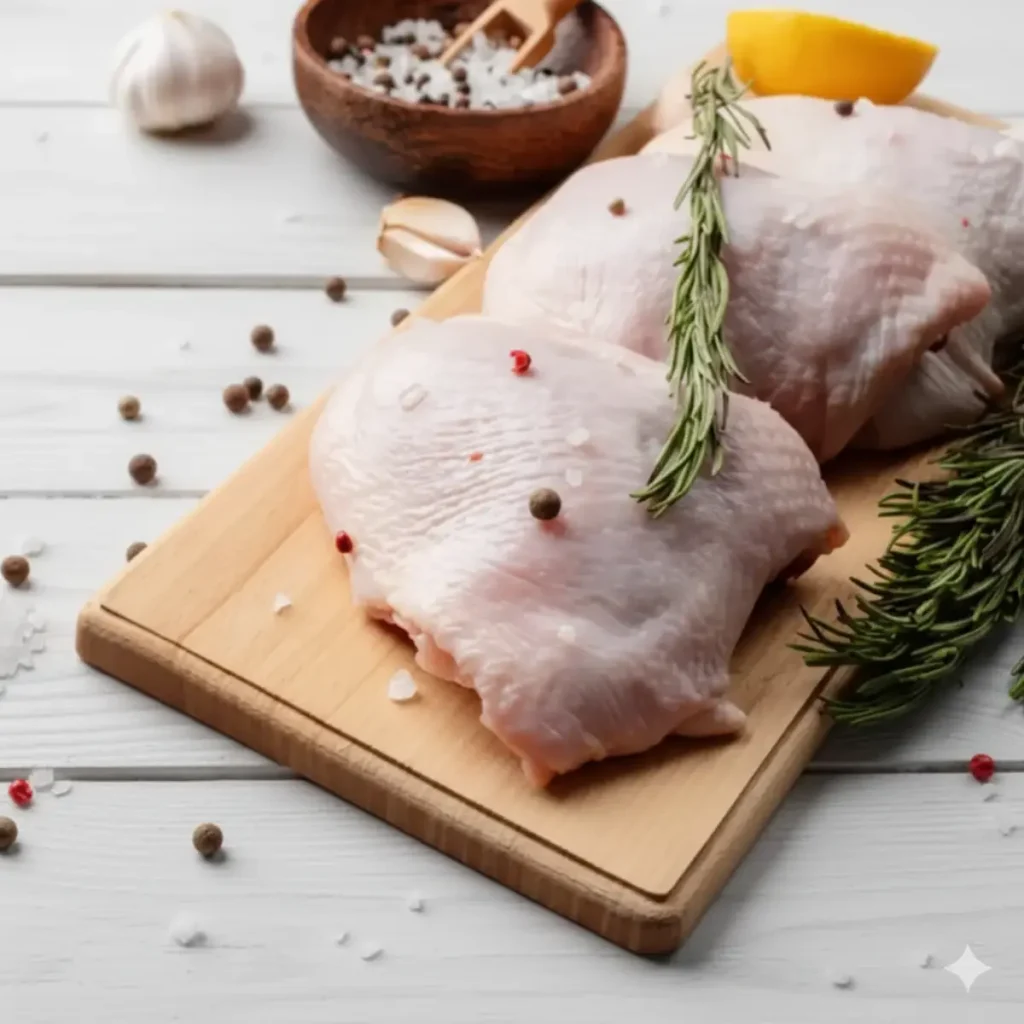
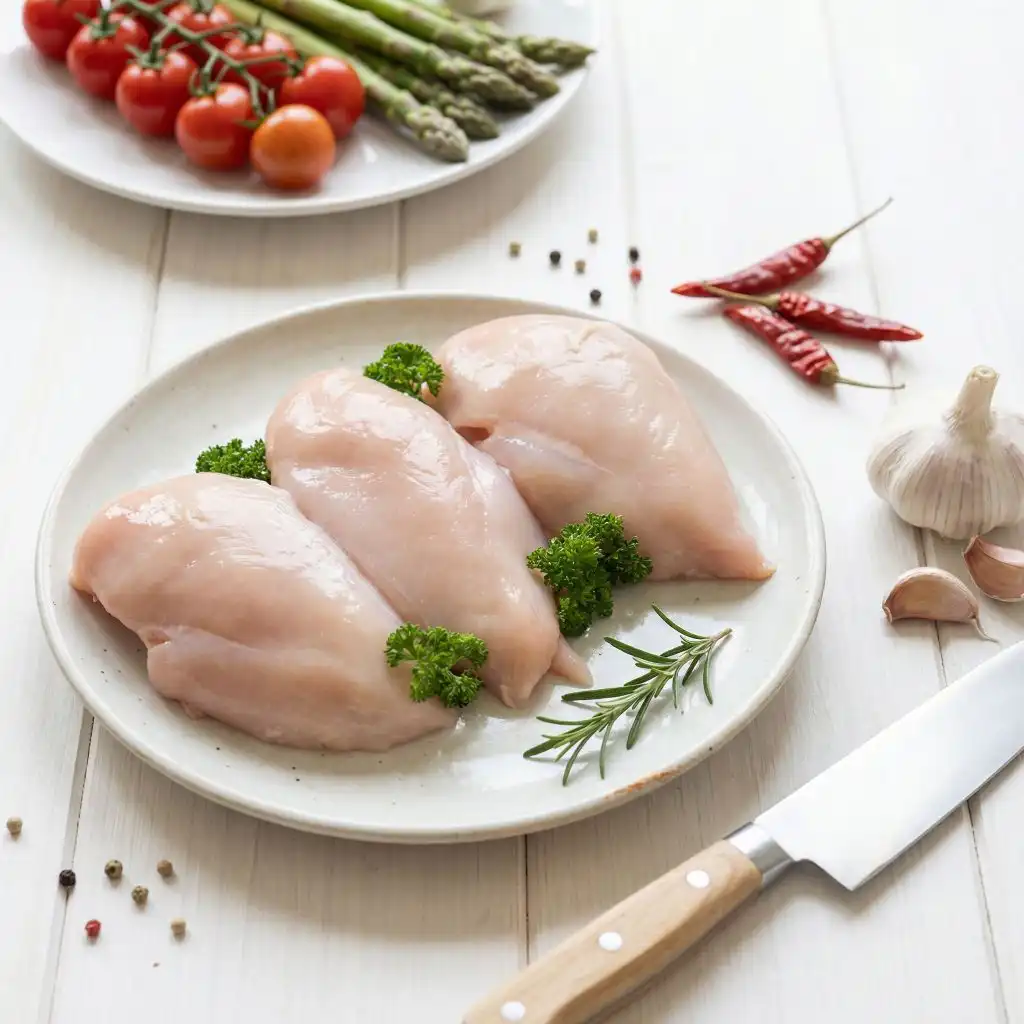
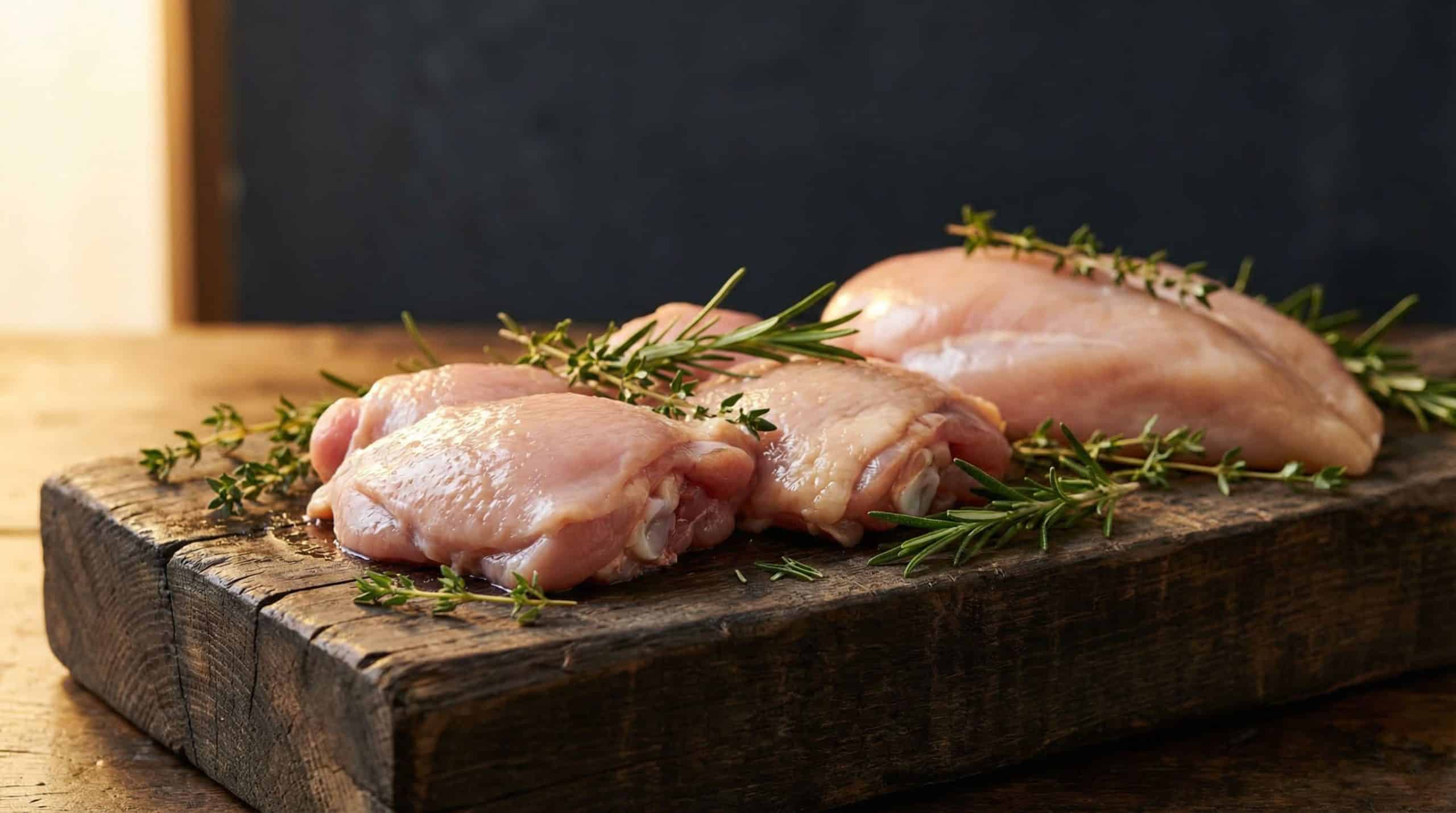
Chicken breast is white meat; thighs are dark meat — and that single biological fact explains almost everything. White muscle fibres (breast) are built for short bursts of activity and contain very little fat. Dark muscle fibres (thighs) are built for sustained movement and carry significantly more intramuscular fat and myoglobin, the protein that gives dark meat its deeper colour and richer taste.
In practical terms, thighs have roughly twice the fat of breast, a slightly lower protein content, and a flavour profile that's more savoury and pronounced. Breast is leaner, milder, and more uniform in texture.
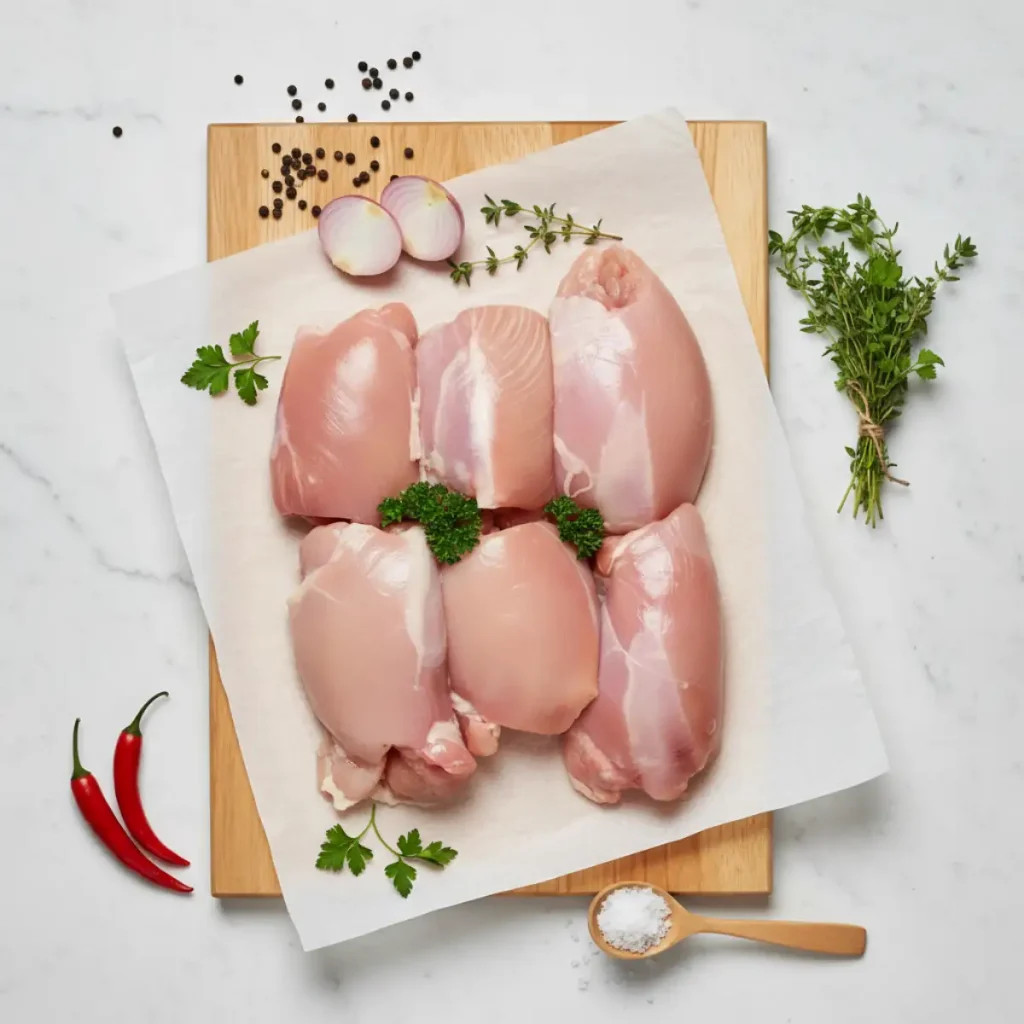
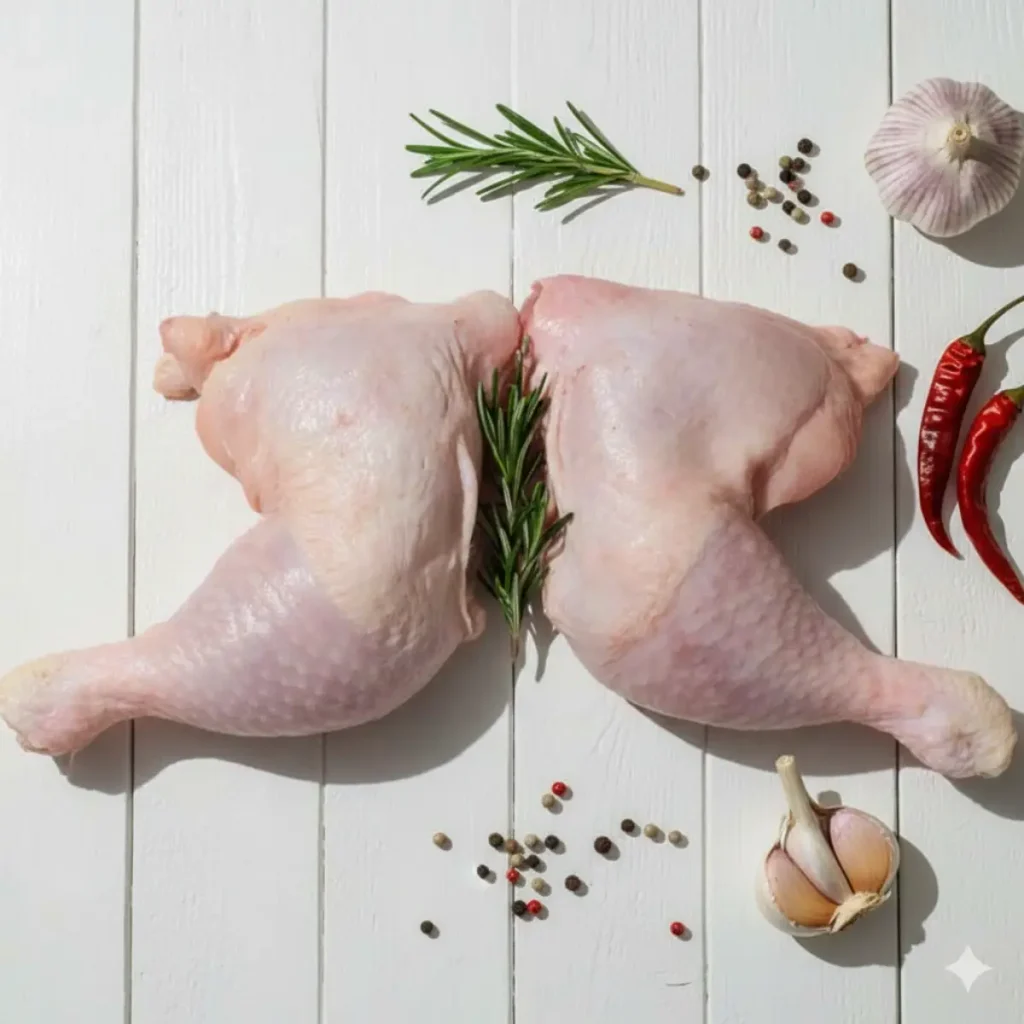
Both cuts are widely available in Australia, with or without the bone and skin. Understanding the difference between a thigh fillet (boneless, skinless), a thigh cutlet (bone-in, skin-on), and a Maryland (thigh and drumstick joined) matters — each behaves differently in the pan, oven, or pot.
Chicken Thigh (skinless, raw)
Chicken Breast (skinless, raw)
Calories per 100g
~177 kcal
~165 kcal
Protein per 100g
~26g
~31g
Total fat per 100g
~8.4g
~3.6g
Saturated fat per 100g
~2.3g
~1.0g
Iron per 100g
~1.3mg
~0.4mg
Source: USDA FoodData Central
How Do the Calories, Protein, and Fat Actually Compare?
Per 100g of raw skinless meat, chicken breast has more protein (31g vs 26g) and fewer calories (165 kcal vs 177 kcal), according to USDA FoodData Central. The gap is real but not dramatic — a typical 180g chicken thigh fillet gives you around 47g of protein, which is solid by any measure.
The bigger difference is fat. Thighs carry around 8.4g of fat per 100g compared to breast's 3.6g. Most of that is unsaturated fat, not saturated — a distinction worth making. Saturated fat in thighs sits at roughly 2.3g per 100g, modest in the context of a balanced diet.
Where thighs genuinely pull ahead is micronutrients. Dark meat is higher in iron (~1.3mg per 100g vs ~0.4mg for breast), zinc, and vitamin B12. If you're relying on meat as an iron source — particularly relevant for women, growing kids, or anyone eating less red meat — thighs offer more value per serve.
The honest summary: if you're tracking macros precisely or eating in a calorie deficit, breast is the cleaner choice. For everyone else, the nutritional difference is small enough that cooking enjoyment and outcome matter more.
Source: USDA FoodData Central — raw, skinless values. Calories displayed at ÷2 scale for chart readability.
Which Tastes Better — and Why Does It Matter?
Chicken thighs win on flavour for most people, and the reason is straightforward: fat carries flavour.
💡 Food science: Harold McGee documented in On Food and Cooking that intramuscular fat acts as a solvent for flavour compounds — as fat renders during cooking, it distributes those compounds through the meat. It's why dark meat tastes richer even when cooked the same way. The richer, more savoury taste you get from a thigh compared to a breast isn't in your head. It's fat doing its job.
The other factor is moisture. Chicken breast is lean muscle — when it hits high heat, the fibres contract and squeeze out moisture fast. Pull the breast even slightly past 74°C internal, and it goes dry. Thighs are more forgiving: the intramuscular fat insulates, and the collagen in dark meat starts converting to gelatin around 75–80°C, which actually makes the meat more tender and succulent the longer you cook it.
Breast has a clean, mild, neutral flavour — and that's genuinely useful in some dishes. If the sauce is the star (a rich butter chicken, a delicate poaching broth), you sometimes want the meat to stay in the background. But for most everyday cooking, the depth of flavour in thighs is an advantage, not something to compensate for.
Which Chicken Cut Is Best for Each Cooking Method?
The most useful way to think about this isn't "which cut is better" — it's "which cut is right for what I'm cooking." Here's a quick guide, then the details below.
Cooking Method
Best Cut
Why
Curry / slow cooker
Thigh (fillet or cutlet)
Stays tender; fat bastes the meat; bone adds depth
Tray bake
Thigh
Forgiving at high oven temp; self-bastes
Schnitzel
Breast (or thigh)
Breast: even thickness easy to pound; thigh: harder to overcook
Thighs are the clear winner here — full stop. Long, slow cooking in liquid is where the fat and collagen in dark meat shine. A thigh fillet dropped into a curry at the start of cooking comes out tender and deeply flavoured. Do the same with breast, and you'll end up with a texture closer to dry cotton wool after an hour of simmering. Bone-in options like thigh cutlets and chicken marylands add even more flavour to the sauce as the marrow and collagen leach out. That's exactly why those Tokyo curries tasted so good — bone-in thighs cooked low and slow.
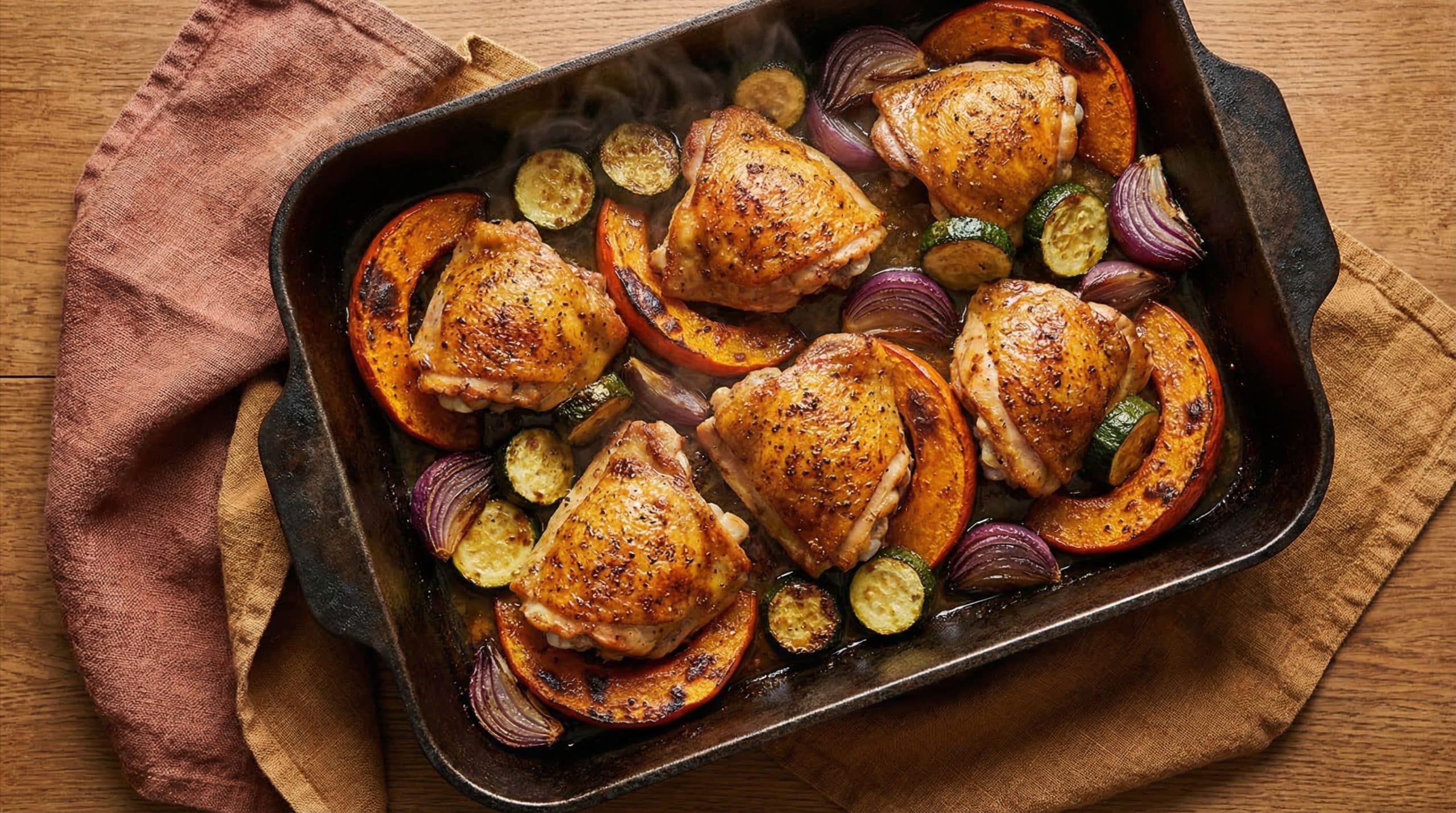
Thighs again. Tray bakes are one of Australia's most popular weeknight dinners, and they run hot — usually 200–220°C for 35–45 minutes. Chicken breast at that temperature needs careful timing to stay juicy; give it five minutes too long, and it's done. Thighs handle that heat comfortably. The fat self-bastes as it renders, keeping the meat moist even if dinner gets pushed back by fifteen minutes. If you do want to use breast in a tray bake, add it later in the cook or brine it first.
Schnitzel
Traditionally, schnitzel is made with breast — the flat, even shape pounds out easily and gives you that consistent crumb-to-meat ratio. A good chicken schnitzel from the breast is hard to beat. That said, thigh schnitzel has its own appeal: richer flavour under the crumb, and because thigh is more forgiving of heat, it's actually harder to overcook. You'll get a slightly more irregular shape, but most home cooks won't mind. Worth trying if you haven't.
BBQ and Grilling
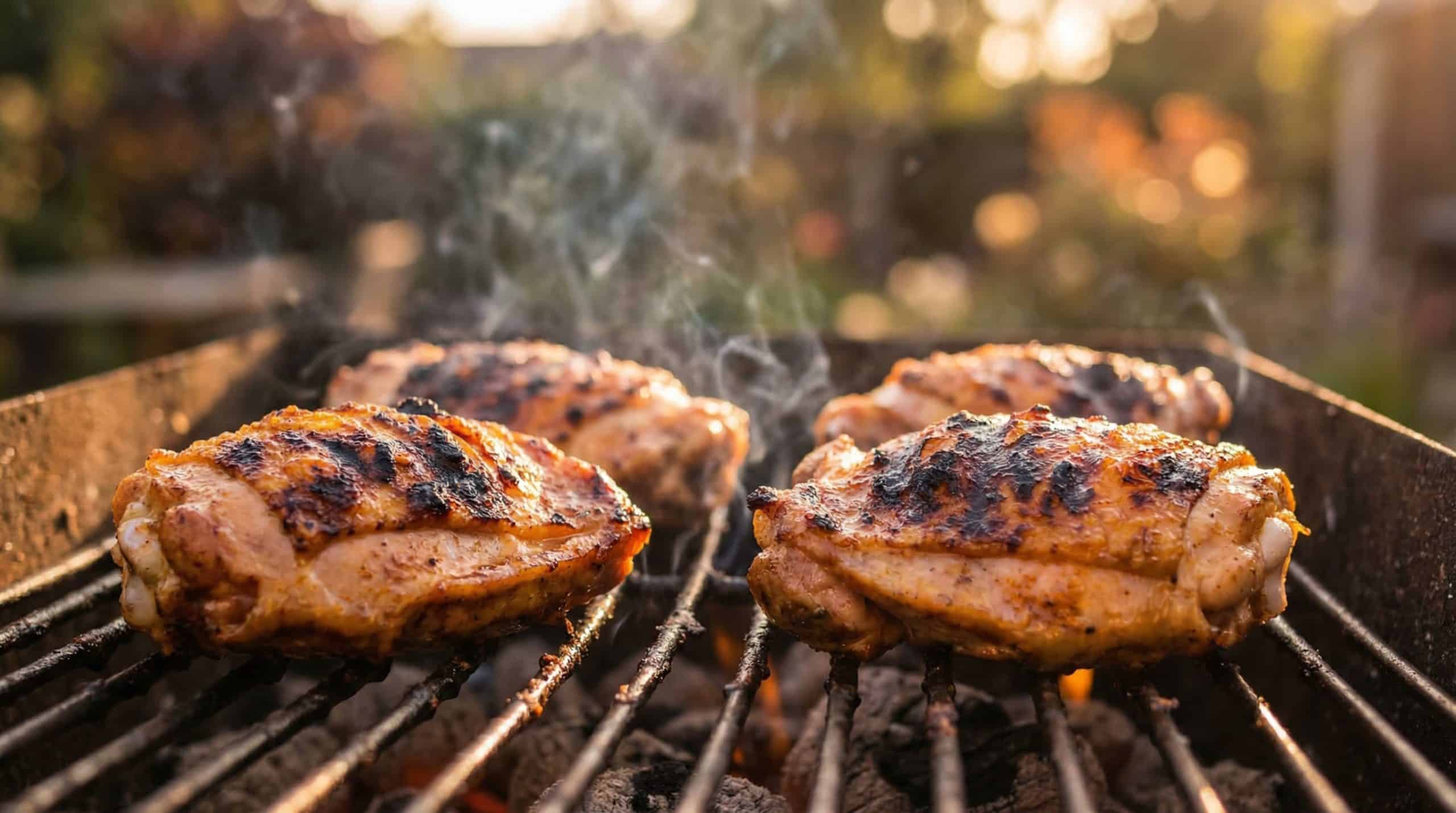
Grilled chicken sizzling on the barbecue.
Thighs are the butcher's choice for the barbie. The fat in dark meat protects against the direct, dry heat of a grill in a way that breast simply can't — breast needs to come off at 74°C internal or it dries out quickly, and the margin for error over live coals is slim. Thighs have a much wider "done" window: anywhere from 74°C through to 85°C, the meat stays juicy and flavourful. Skin-on thigh cutlets or marylands are particularly good — the skin crisps up and bastes the meat underneath.
Shop:Chicken Marylands — bone-in thigh and drumstick, perfect for the BBQ.
Stir Fry
Either cut works well here. Stir fry is a quick-cook method — high heat, short time — so neither cut is under enough stress to dry out badly. Breast sliced against the grain gives you clean, tender strips that absorb sauce well. Thigh gives you a slightly richer flavour and is more forgiving if you're managing a busy wok. Slice either cut thinly and against the grain for the best texture.
Meal Prep
Thighs reheat significantly better than breasts. Cold or reheated chicken breast often goes chalky and dry — a texture problem that doesn't exist with thighs, which stay tender and flavourful the next day. If you're batch-cooking for lunches through the week, thighs are the practical choice. The exception: if you're tracking calories or macros precisely, the slightly higher fat content in thighs might push you back to breast for control.
What Temperature Should You Cook Chicken Thighs and breasts to?
The minimum safe internal temperature for all chicken in Australia is 74°C (165°F), per Food Standards Australia New Zealand (FSANZ). That applies to both cuts. But the ideal target temperature differs significantly between the two — and understanding this is the difference between dry chicken and properly cooked chicken.
Chicken Breast
Chicken Thigh
Safe minimum (FSANZ)
74°C
74°C
Ideal texture target
74°C — pull immediately
80–85°C
Why
Fibres dry out fast above 74°C
Collagen converts to gelatin; more tender
Oven temp (typical)
180–190°C
190–220°C
Done-temperature window
Narrow (±3°C)
Wide (±10°C)
Breast is unforgiving. Hit it at 74°C, rest it briefly, and serve — every degree above that dries it out further. Thighs behave differently: they benefit from going higher. At 80–85°C, the collagen in the dark muscle tissue has fully converted to gelatin, making the meat noticeably more succulent. A thigh pulled at 74°C is safe, but one pulled at 82°C is often better. This is why thighs are so much more forgiving for home cooks — you have a much wider window before they suffer.
A reliable probe thermometer takes the guesswork out of it entirely. Without one, look for completely clear juices when the thickest part is pierced, and no pink at the bone.
Price and Value: Which is a better value in Australia?
Unlike in the United States, where chicken thighs have traditionally been priced significantly below breast, the Australian market has largely reached parity. At major supermarkets, both boneless skinless cuts typically sit in a similar price range per kilogram. The old rule — "thighs are always the budget option" — doesn't reliably hold here anymore.
Where thighs do win on value is the broader picture. Bone-in options — thigh cutlets and chicken marylands — are generally cheaper per kilogram than boneless breast, and they deliver more flavour. The bones contribute to sauces, stocks, and braises in a way that boneless breast can't. When you factor in cooking forgiveness (fewer ruined meals), flavour output, and iron content, thighs represent strong value for most households.
At Pryde Butchery, we stock air-chilled, hormone-free, chemical-free chicken — which means the product you receive hasn't been water-chilled (a process that adds water weight and dilutes flavour). That quality difference shows up most clearly with thighs, where the natural fat and flavour are more pronounced in a properly handled bird.
Our Verdict: Which Should You Buy?
For most home cooks, most of the time: chicken thighs.
They're more forgiving, more flavourful, and more versatile across the cooking methods Australians actually use — tray bakes, curries, BBQ, and slow cooker. The nutrition difference is real but modest, and for anyone who isn't tracking macros precisely, it's rarely the deciding factor.
That said, chicken breast has a genuine place. Use it when:
You're tracking calories or fat intake precisely
You need a mild, neutral flavour that won't compete with a delicate sauce
You're doing a classic schnitzel and want even thickness
You're poaching for sandwiches or salads where texture matters
Quick decision guide:
If you're cooking...
Buy...
Curry or slow cooker
Thigh fillets or cutlets
Tray bake
Thigh fillets
BBQ or grilling
Thigh cutlets or marylands
Schnitzel
Breast (or thigh if you want more flavour)
Stir fry
Either — thigh for flavour, breast for clean strips
Meal prep
Thigh fillets
Calorie-controlled meals
Breast
Both cuts are worth having in your fridge. The cooks who get the best results tend to reach for the cut that suits the job rather than defaulting to one or the other out of habit.
Both are nutritious, high-protein choices. Chicken breast is lower in calories (165 kcal vs 177 kcal per 100g) and fat, making it better for strict calorie control. Chicken thigh has more iron (~1.3mg vs ~0.4mg per 100g) and B12, and the fat it contains is mostly unsaturated. Neither is "unhealthy" — the better choice depends on your specific health or diet goal. (USDA FoodData Central)
Can I substitute chicken thighs for breasts in a recipe?
Yes, in most cases. Thigh handles long and high-heat cooking better than breast, so in curries, casseroles, tray bakes, and BBQ dishes, you can swap freely — and usually end up with a better result. For dishes where a lean, even texture matters (classic schnitzel, delicate poaching), breast is harder to replace. Adjust cook time slightly: thighs can go longer; breast needs to be watched more closely.
Why does chicken breast go dry so easily?
Chicken breast is lean white muscle with very little intramuscular fat. When cooked above 74°C, the muscle fibres contract rapidly and squeeze out their moisture — and once that moisture is gone, it doesn't come back. Thighs contain more fat and collagen, which protect against moisture loss and actually improve in texture at higher temperatures as collagen converts to gelatin.
What temperature should I cook chicken thighs to?
The safe minimum for all chicken in Australia is 74°C internal (FSANZ). For the best texture, pull the chicken breast at 74°C immediately — it deteriorates quickly above this. Chicken thighs benefit from going a little higher: 80–85°C is the point at which collagen has fully converted to gelatin, making the meat noticeably more succulent. A meat thermometer is the most reliable way to hit these targets.
Are chicken thighs cheaper than breasts in Australia?
Not always — unlike the United States, where thighs are traditionally priced well below breast, the Australian market has largely reached price parity for boneless skinless cuts. However, bone-in options like thigh cutlets and chicken marylands are typically cheaper per kilogram than boneless breast, and they deliver more flavour. For value-focused cooking, bone-in thigh cuts are generally the better buy.
The Bottom Line
The chicken thighs vs breast debate doesn't have a single correct answer — it has a correct answer for the dish you're making. Thighs for flavour, forgiveness, and most everyday cooking. Breast when you need lean, precise, or neutral. Both deserve a place in a well-stocked fridge.
Those bone-in curries in Tokyo tasted the way they did because the cook knew which cut to use for the job. That's the whole lesson, really.
Nutritional data: USDA FoodData Central. Food safety temperatures: Food Standards Australia New Zealand (FSANZ). Cooking technique references: Harold McGee, On Food and Cooking (Scribner, 2004).
David deMarco is the owner of Pryde Butchery in Miranda, NSW. With a background in IT and lived around the world, he brings deep knowledge of meat, cooking and modern food retail. Known for championing quality, service, and innovation, David has grown Pryde into one of Sydney’s top butcheries, both in-store and online.