

If you’ve ever followed a recipe and wondered what cuts of beef it’s referring to, you’re not alone. The same cut can go by different names depending on where you are, making it tricky to find the right match. A ribeye in one country might be a Scotch fillet in another, and short ribs can mean different things depending on the butcher.
To make things easier, we’ve put together a practical global guide to beef cuts (primarily across the USA, UK, and Australia). Whether you're grilling steaks, slow-cooking ribs, or selecting the perfect roast, this guide helps you find the equivalent cuts so you can shop confidently and cook with precision.
Part One will cover common steaks, not so commom steak, ribs and the chuck.
Below is a comparative table showing some common steak cuts and the equivalent or most closely related names used in the USA, UK, and Australia. Please note that regional variations and butcher-specific terminology can exist, so these are general guidelines rather than absolute rules.
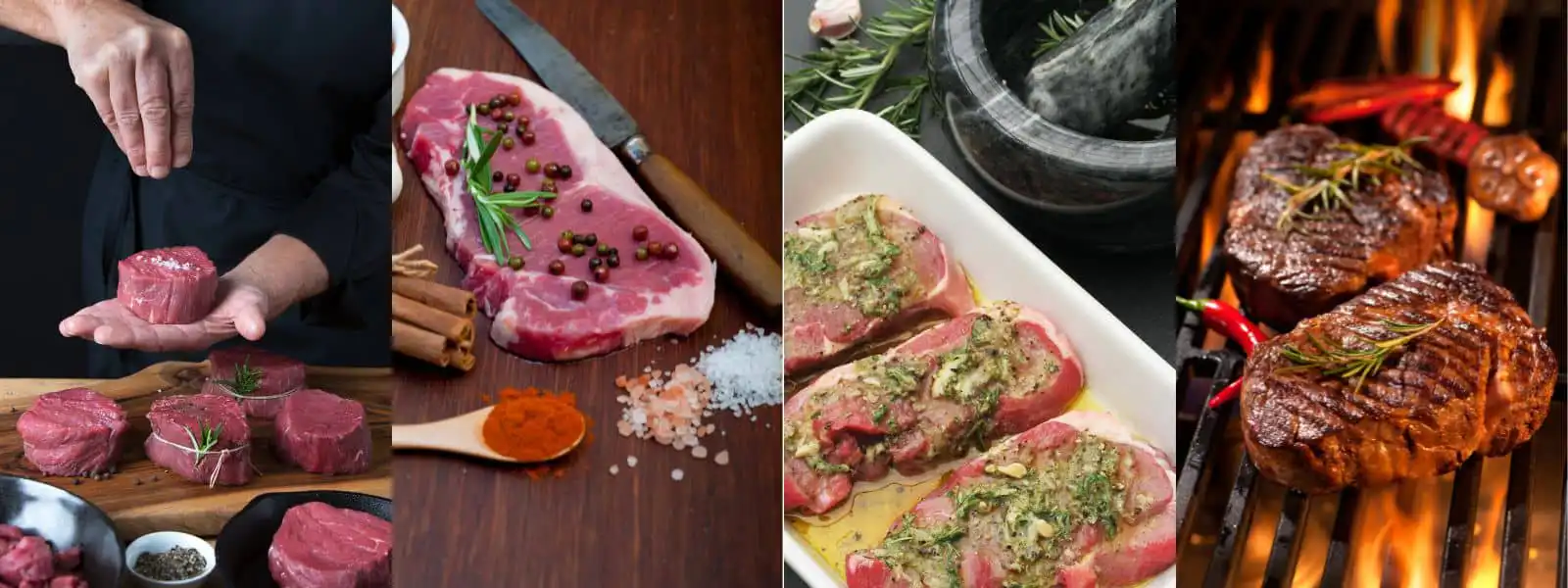
Here’s the definative list of popular steak cuts for all the steak lovers.
| Cut / Name | USA | UK | Australia |
|---|---|---|---|
| Prime Rib | Prime Rib, Standing Rib Roast (when roasted) | Fore Rib, Rib of Beef, Rib Roast | Standing Rib Roast, Scotch Fillet Roast |
| Cowboy Steak | Cowboy Steak (bone-in ribeye) | Bone-in Rib Eye, sometimes referred to as Côte de bœuf | Cowboy Steak (bone-in ribeye) |
| Rib Eye | Ribeye Steak | Rib Eye Steak | Scotch Fillet |
| Tomahawk | Tomahawk Steak (long bone-in ribeye) | Tomahawk Steak | Tomahawk Steak |
| Cattlemans Cutlet | Not a common term; large bone-in ribeye (similar to Cowboy Steak) | Not commonly used; could be termed a Bone-in Rib Eye | Cattlemans Cutlet (a large, bone-in ribeye cut) |
| Eye Fillet | Beef Tenderloin (whole), or Filet Mignon (portion) | Fillet Steak (if portioned for individual steaks) | Eye Fillet |
| Fillet Steak | Tenderloin Steak / Filet Mignon | Fillet Steak | Eye Fillet / Fillet Steak |
| Filet Mignon | Filet Mignon | Typically called Fillet Steak | Eye Fillet |
| T-Bone Steak | T-Bone Steak (short loin, includes tenderloin & strip) | T-Bone Steak | T-Bone Steak |
| Sirloin Steak | New York Strip, Strip Steak, Kansas City Strip | Sirloin Steak (UK Sirloin is more like US Ribeye) | Porterhouse (when cut larger), Striploin Steak |
| New York Strip | New York Strip, Strip Steak | Similar to Rump/Sirloin cuts but not commonly used | Porterhouse (for larger cuts), Striploin Steak New York Steak |
| Porterhouse | Porterhouse Steak (like T-Bone but with larger tenderloin section) | Porterhouse (sometimes used interchangeably with T-Bone) | Porterhouse Steak (with a larger tenderloin portion) |
| Rump Steak | Rump Steak (flavourful, firm texture, beefy flavor) | Rump Steak, sometimes called Popeseye Steak (in Scotland) | Rump Steak, often subdivided into Rump Cap (Picanha) and Heart of Rump |
Below is a “not so common” steaks reference table. Many of these cuts are popular in certain local or niche butcher shops and restaurants but are not typically found pre-packaged in mainstream supermarkets. Names can also vary regionally and even from butcher to butcher, so consider these general guidelines.

| Cut | USA | UK | Australia |
|---|---|---|---|
| Hanger Steak(aka “Butcher’s Steak”, “Onglet”) | Hanger Steak or “Butcher’s Steak” | Commonly called Onglet (French term) or Hanger Steak | Usually Hanger Steak or Onglet (less common retail) |
| Oyster Steak(a small cut near the backbone) | Sometimes sold as Oyster Steak (rare) or simply included in other cuts | Rarely labeled separately; may be part of the rump or included in the “oyster” of the carcass | Not commonly recognized as a separate retail cut (not to be confused with Oyster Blade) |
| Blade Steak(Top Blade from the chuck) | Often labeled Blade Steak or Top Blade Steak; if the central fascia is removed, it becomes Flat Iron Steak | Sometimes referred to as Feather Blade or Top Blade Steak | Known as Oyster Blade or Blade Steak; when trimmed, sold as “Flat Iron” in some specialty shops |
| Skirt Steak(diaphragm muscle) | Skirt Steak (Inside or Outside Skirt); popular for fajitas | Often referred to as Skirt or occasionally Thin Skirt; sometimes “Bavette” is used loosely (though more accurately flank) | Generally Skirt Steak; sometimes confused with flank in casual use |
| Flank Steak(lower abdominal area) | Flank Steak | Flank Steak, sometimes labeled Bavette in French-inspired butchers | Mostly Flank Steak; can be labeled as Bavette in some modern/restaurant contexts |
Below are some lesser-known cuts sometimes seen on specialty menus or at artisan butchers:
Below is a comparative Beef Ribs reference table in the same format (with USA, UK, and Australia along the top). Beef rib nomenclature can be confusing because different regions break down the carcass differently and use overlapping terms. This table covers the most common retail rib cuts and their usual names.
| Cut | USA | UK | Australia |
|---|---|---|---|
| Short Ribs | Short Ribs (commonly “English Cut” or “Flanken Cut”); from the chuck or plate | Short Ribs or Jacob’s Ladder (especially in restaurants) | Short Ribs (often plate or chuck ribs; sometimes called “Jacob’s Ladder” in high-end venues) |
| Back Ribs | Back Ribs (a.k.a. “Beef Back Ribs”) | Back Ribs | Back Ribs |
| Plate Ribs | Plate Short Ribs or Dino Ribs (large, meaty ribs cut from the plate) | Usually included under Short Ribs / Jacob’s Ladder; specific “Plate” term is less common | Often just Short Ribs or sometimes labeled Plate Ribs or “Dino Ribs” in BBQ contexts |
| Beef Spare Ribs | Term sometimes used interchangeably for trimmed beef back ribs or short ribs | Seldom labeled “Beef Spare Ribs” (the phrase “spare ribs” more commonly used for pork) | Can appear as Beef Spare Ribs, typically from the meaty portion of short/back ribs |
| Chuck Ribs | Chuck Short Ribs (part of the chuck primal) | Typically sold as part of Short Ribs | Often called Chuck Ribs if specifically portioned from that primal |
Below is a reference table for common Chuck primal sub-cuts in the United States, the United Kingdom, and Australia. Because butchery practices vary significantly across regions (and even individual butchers), you’ll find some overlap and differing names for similar cuts. The table aims to capture the most recognized or retail-available terminology in each locale.

| Sub-Cut | USA | UK | Australia |
|---|---|---|---|
| Chuck Roast(bone-in or boneless)Common variants: 7-Bone Roast, Blade Roast, Arm Roast | Often sold simply as Chuck Roast (bone-in or boneless). Sub-variants include:• 7-Bone Chuck Roast• Arm Chuck Roast• Blade Chuck Roast | Often sold as part of “Chuck & Blade” or labeled Braising Steak (when boned/portioned). Larger bone-in roasts are less common in UK retail. | Typically labeled Chuck Roast or simply “Chuck” for bone-in.Boneless is often sold as Blade Roast or Shoulder Roast. |
| Chuck Eye Roast and Chuck Eye Steak | Chuck Eye Roast (a smaller roast from the rib end of the chuck).Chuck Eye Steak sometimes called “Poor Man’s Ribeye” | Not commonly isolated under “Chuck Eye.” Might be included in generic Chuck Steak or sold as part of braising steak. | Typically grouped under Chuck Steak. Specialty butchers may label a portion as Chuck Eye but it’s not widely differentiated. |
| Top Blade Steak(Flat Iron Steak if seam removed) | Top Blade Steak (with central seam intact).Flat Iron Steak (when fully trimmed of connective tissue). | Often called Feather Blade Steak or simply “Top Blade.”Flat Iron is increasingly recognized in modern or gourmet butchers. | Commonly known as Oyster Blade Steak (with seam).When fully trimmed, sold as Flat Iron Steak in specialty/restaurant contexts. |
| Denver Steak(from under the shoulder blade) | Denver Steak – a newer, marketed cut from the underblade (chuck roll). | Rarely recognized as a separate retail cut; may be sold under generic Chuck Steak or occasionally labeled “Denver Steak” in niche/modern butchers. | Similarly uncommon; often just grouped under Chuck or Blade steak. Some premium butchers may label it Denver. |
| Cross Rib Roast(aka “Shoulder Roast” or “Boston Cut”) | Cross Rib Roast (despite “rib” in the name, this is from the chuck). Sometimes also called Shoulder Roast or “Boston Cut.” | Typically rolled into generic Shoulder/Braising Roast or Neck & Clod. Rarely singled out as “Cross Rib.” | Often Bolar Blade Roast is the closest equivalent (from the shoulder clod). “Cross Rib” is not a common retail name. |
| Shoulder Clod / Clod Heart | Shoulder Clod or Clod Heart (used for roasts or ground beef) | Largely included in Shoulder/Braising cuts; not typically sold separately by this name. | Often referred to as part of the Bolar Blade sub-primal. You’ll see Bolar Roast in Aussie butchers. |
| Mock Tender(sometimes “Scotch Tender”) | Mock Tender Roast (shaped like a small tenderloin but tougher). Commonly used for stew or slow-cooking. | Not commonly isolated or labeled as “Mock Tender.” Often just part of the diced/braising steak. | Similar to the UK; usually part of generic Chuck / Blade for stews. Scotch Tender is seldom seen retail but recognized in some references. |
