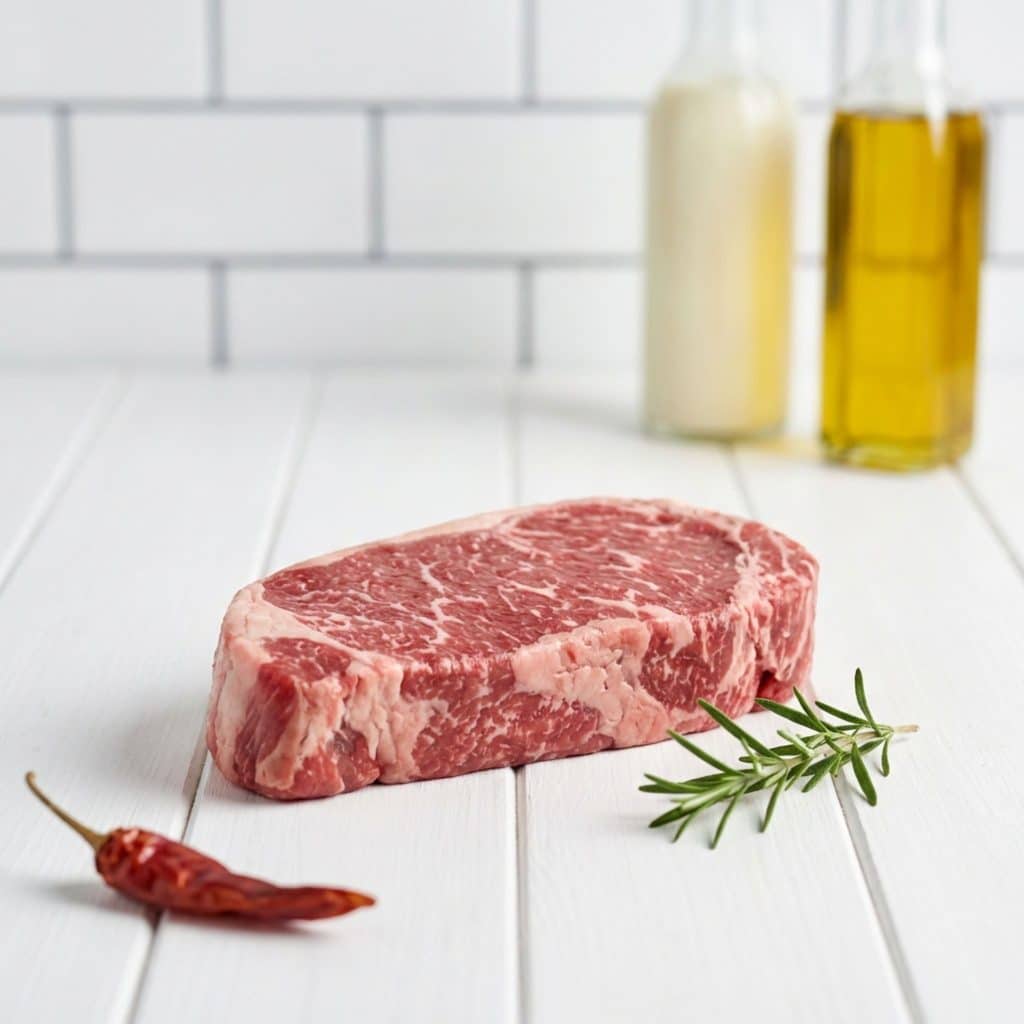
One in four Australian households is a single-person household — that's 2.64 million people, projected to reach 3.79 million by 2046 (ABS Household and Family Projections, 2023). Every one of those people still deserves a proper roast beef dinner. A whole joint doesn't make sense for one. A thin pan steak doesn't scratch that itch either.
The Cattleman's Cutlet solves this. It's a thick-cut, bone-in beef rib steak — big enough to carry a full roast-style plate, manageable enough to cook on a Tuesday night. Sear it, finish it in the oven, and rest it properly. Done in under 40 minutes. This guide walks through exactly how to do it.
New to beef cuts? Our complete guide to Australian beef cuts covers every primal and retail cut from the carcass to the counter.
A Cattleman's Cutlet is a bone-in ribeye, typically 300–600g, cut thick enough to handle the sear-then-oven method. Sear 2–3 minutes per side, finish at 180°C fan-forced, pull at 51–54°C for medium-rare, rest 8–10 minutes. It's the answer to a roast beef dinner for one — with 26% of Australian households now living solo (ABS, 2023), it's a cut worth knowing.
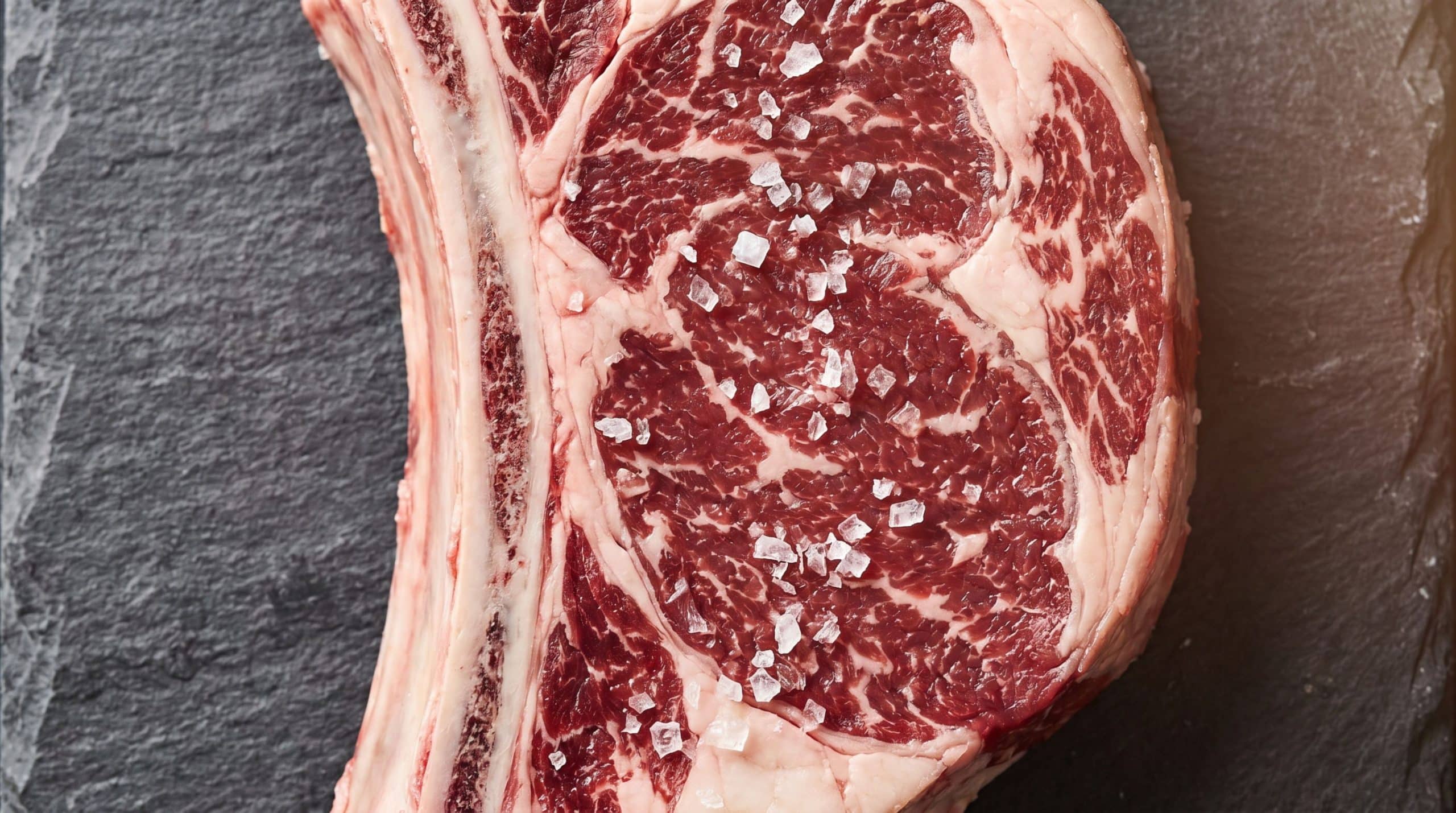
The beef rib primal spans ribs 6 through 12. Inside it sits the longissimus dorsi — the ribeye muscle — one of the most tender muscles on the entire carcass, according to the USDA Beef Checkoff / Beef It's What's For Dinner. It does very little work during the animal's life, which is why it stays so tender and carries that fine, even marbling.
A Cattleman's Cutlet is a thick-cut steak taken from the rib primal, with the rib bone left attached. Some butchers call it a rib eye on the bone or a bone-in ribeye. The defining features are the bone and the thickness — typically 300–600g per piece, cut at least 3–4 cm thick.
That thickness is what makes it different from a standard scotch fillet or boneless ribeye. A thin steak cooks through in minutes on the stove. A Cattleman's Cutlet has enough mass to handle oven time — it sits somewhere between a pan steak and a roast.
The bone adds to the experience, too. It changes how the meat cooks, how it looks on the plate, and, honestly, how it feels to eat. More on that below.
For a direct comparison of bone-in vs boneless ribeye cuts, see Scotch Fillet vs Ribeye: Same Cut, Different Names.

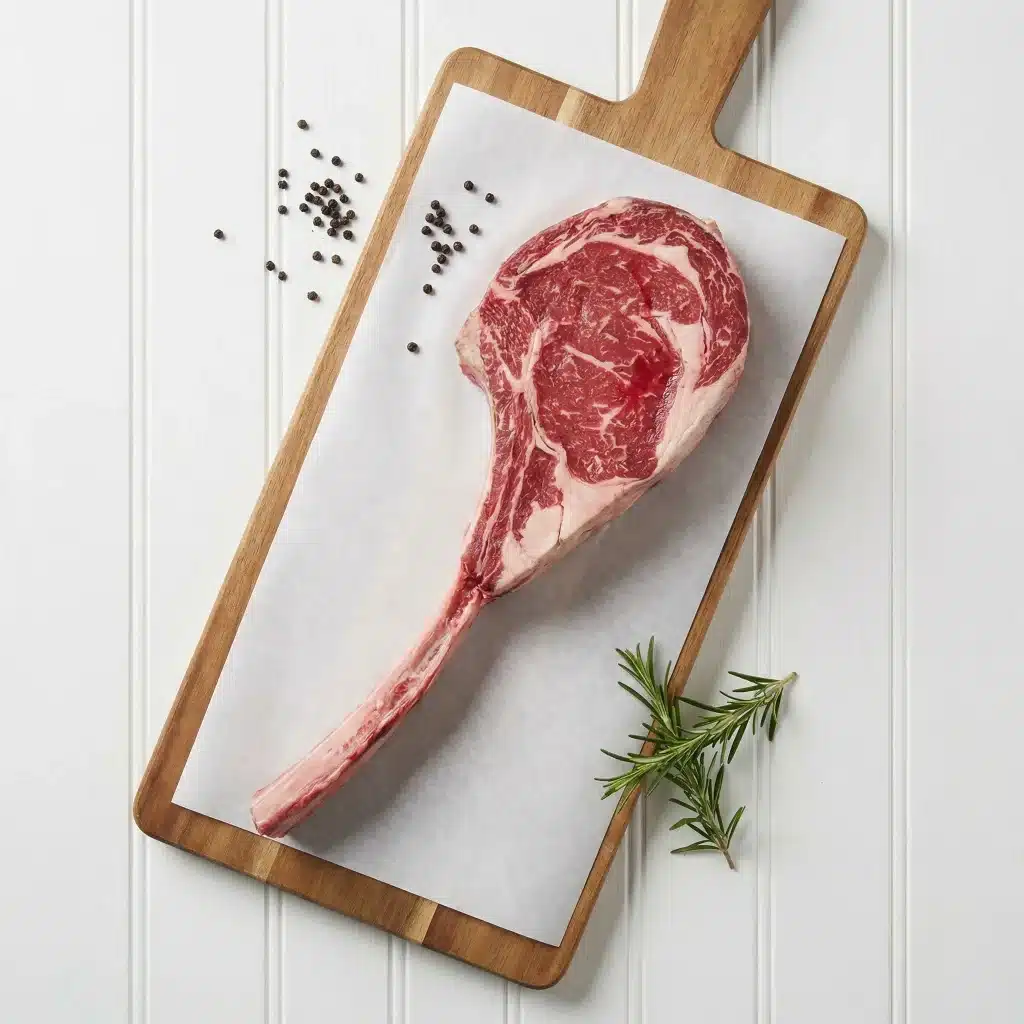
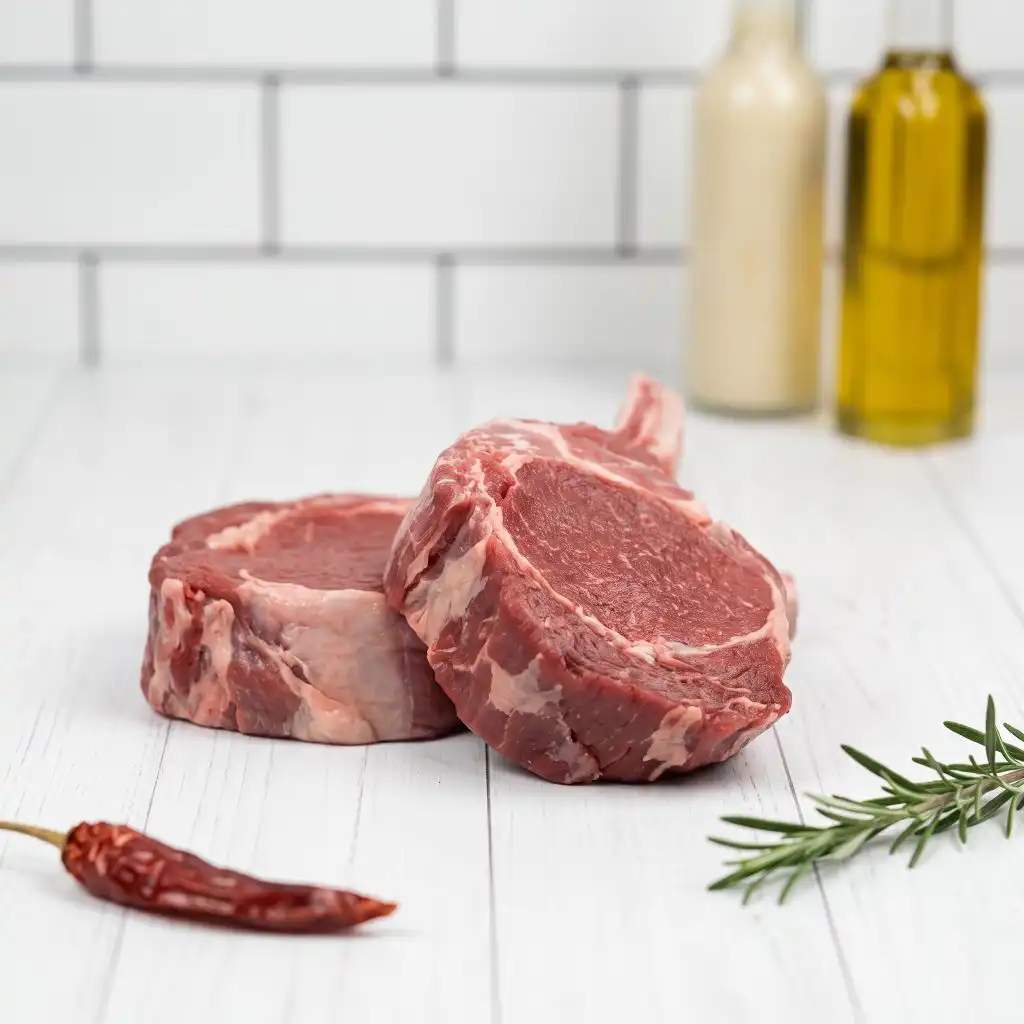
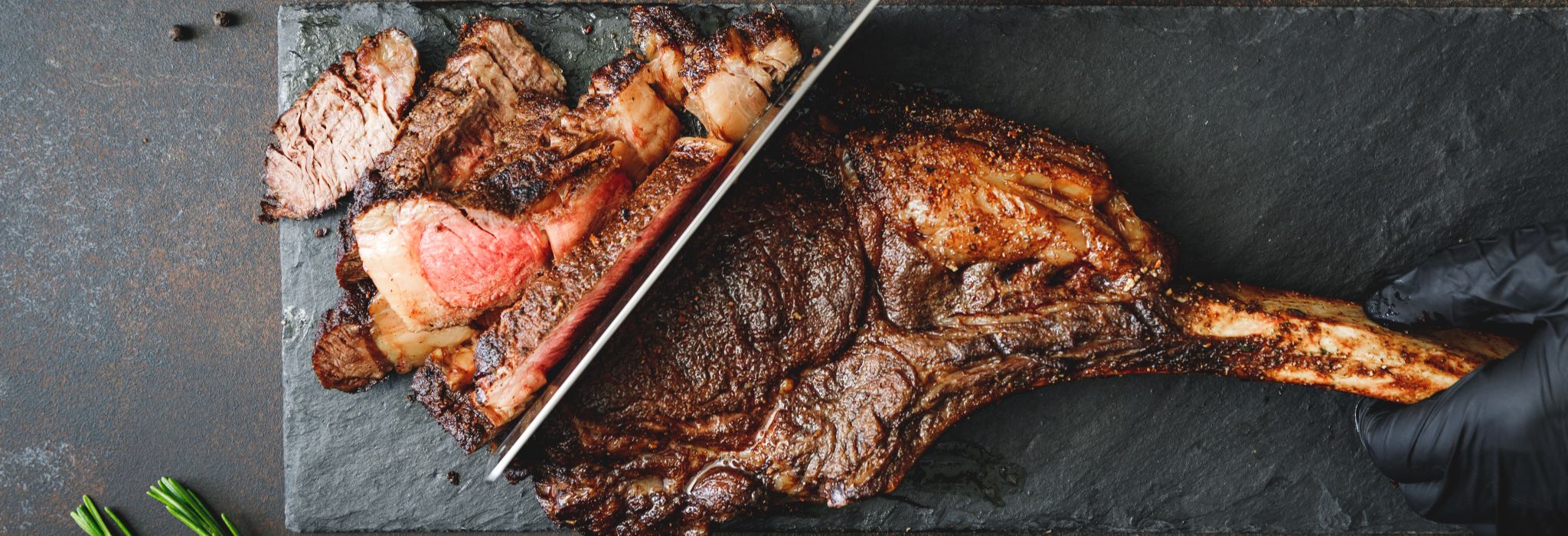
The honest answer is nuanced. A Kansas State University study found no statistically significant flavour difference between bone-in and boneless steaks in blind tastings — 70–97% of consumers rated both acceptable for juiciness, tenderness, flavour, and overall quality (Kansas State University, reported by National Beef Wire, 2022). So the bone isn't a magic flavour button.
What the bone does do is change how the meat cooks. Meat adjacent to the bone runs 3–6°C cooler than the rest of the steak during cooking (K-State, 2022). That slightly cooler zone stays more tender and juicy. You end up with a natural gradient — well-seared crust, cooked-through muscle, and a particularly tender section right against the bone.
The Maillard reaction drives the flavour you actually taste in the crust. It begins generating flavour compounds at 140–165°C surface temperature (PMC peer-reviewed review, 2025). A wet surface can't reach that threshold — water boils at 100°C and keeps the surface cool. That's why patting the steak dry before searing matters more than whether it's bone-in or boneless.
There's also something that doesn't show up in a blind tasting study — the experience of eating from the bone. Picking up a steak by its rib bone changes the meal. At Pryde Butchery, we'd put it this way: the bone doesn't just change the chemistry of cooking, it changes the character of the meal. It's the difference between eating a steak and sitting down to something.
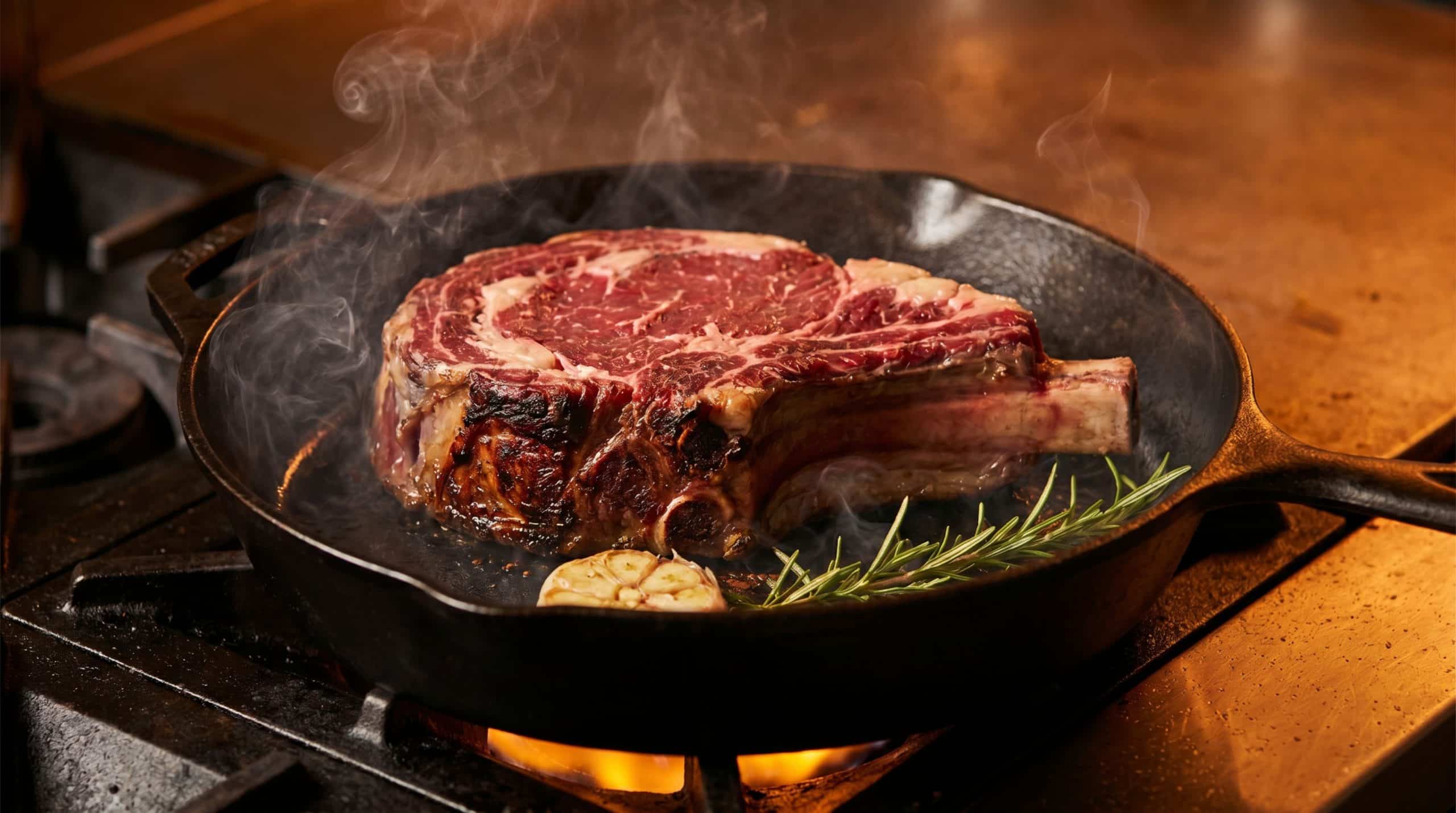
The method is sear, then oven, then rest. Total cooking time is 25–35 minutes, not counting the 30-minute tempering time beforehand. The result is closer to roast beef than a pan steak — a proper crust on the outside, a tender, juicy centre, and the kind of result that makes a one-person dinner feel like an occasion.
Pull the cutlet from the fridge 30 minutes before cooking. This is not optional — it matters. A cold centre means the outside overcooks before the middle reaches temperature. You end up with a grey band around a small pink core, which is not what you're after.
Pat the meat dry with paper towel. Moisture on the surface prevents the Maillard reaction from starting — the surface would steam instead of brown, because water boils at 100°C and can't reach the 140°C minimum needed for browning (PMC, 2025). Season generously with salt and cracked pepper. Add a little olive oil, a crushed garlic clove, and a sprig of rosemary if you like. Simple is fine.
Heat a heavy pan — cast iron is ideal — over high heat until very hot. Add a small amount of oil. Lay the cutlet in and don't move it. Sear 2–3 minutes per side until a deep brown crust forms. You want real colour here, not just a light tan.
Sear the edges too, including around the bone. The bone makes this slightly awkward — use tongs to hold the cutlet upright for 30–60 seconds on each edge. If you're cooking on a BBQ, sear over direct high heat with the lid off. Same principle, same result.
Transfer the seared cutlet to a rack set in a roasting tray. Into a preheated oven at 180°C fan-forced (200°C conventional). The rack keeps air circulating underneath — don't sit it flat in the tray or the bottom stews instead of roasting.
Cook 10–20 minutes, depending on the thickness of your cutlet and your preferred doneness. Use a meat thermometer. Pull the cutlet 3–4°C before your target temperature to account for carryover cooking during resting. Refer to the temperature chart above.
Resting a thick cut matters more than resting a thin steak. Research shows that resting reduces moisture loss from approximately 13% to 6% — cutting immediately loses roughly double the juice of a properly rested steak (Headcount Coffee, 2024, citing controlled trials). That's the difference between a juicy plate and a wet board.
Rest the cutlet on a warm plate, tented loosely with foil, for 8–10 minutes minimum. Don't skip this. Don't rush it. The internal temperature will continue rising 3–4°C during this time (ThermoWorks), which is why you pulled it early.
Slice against the grain at a slight angle. The rib bone runs along one side — cut around it to remove the bone-free slices, or serve the cutlet whole on the bone for presentation. Both work. Serving on the bone looks better if you've gone to the trouble of cooking something this good.
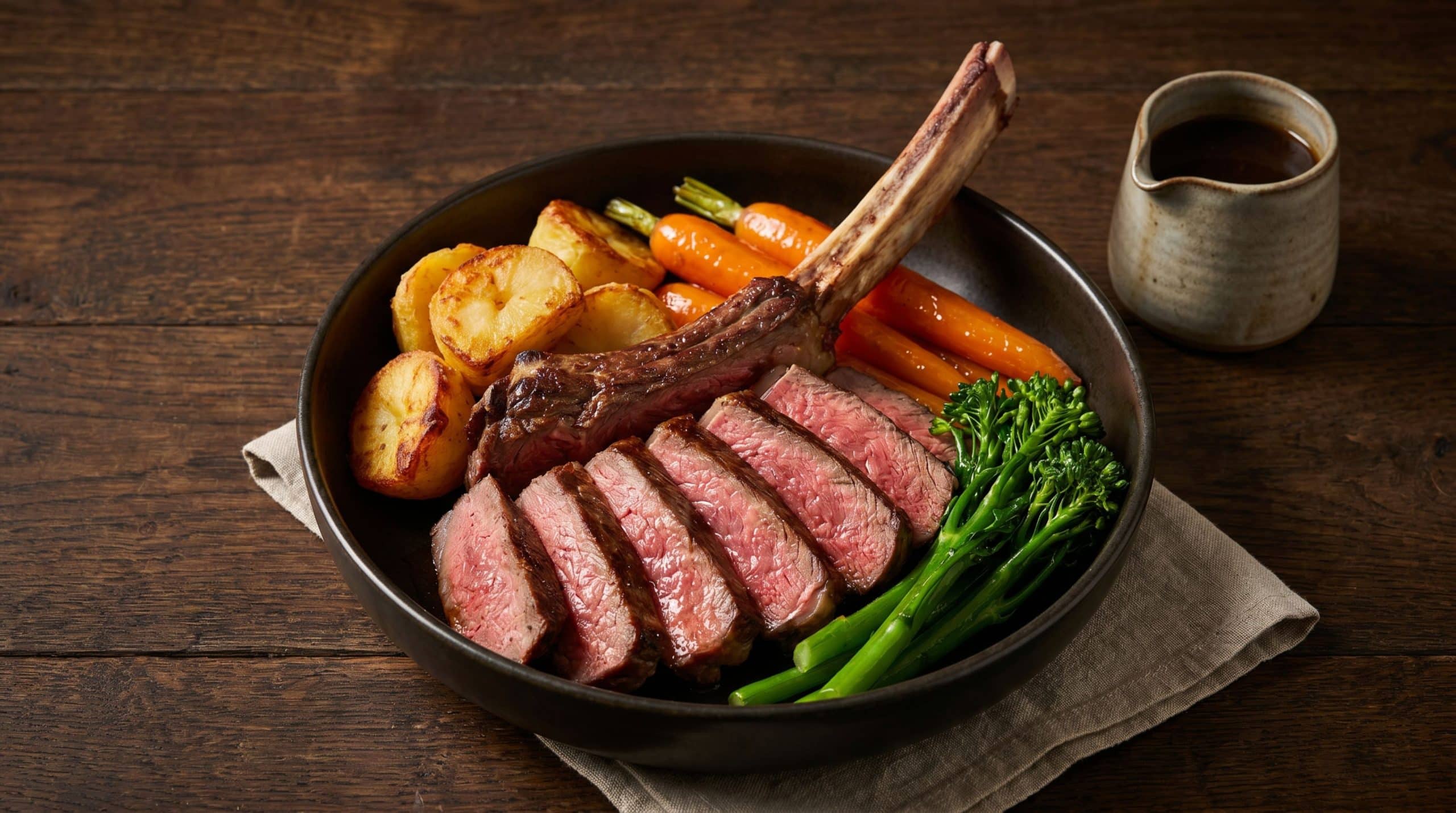
Beef is the centre of the plate here, and the Cattleman's Cutlet is the right size to carry a full roast-style spread. Australian households purchase beef 92% of the time — it's the nation's most trusted protein, with consumption sitting at 22.4 kg per person per year (Meat & Livestock Australia via Gippsland Farmer, November 2025). That figure reflects just how central beef is to the Australian table, and a roast-style cutlet dinner fits right in.
Start the roast potatoes before anything else. They take 40–50 minutes at 200°C — get them into the oven while the cutlet is still tempering. Parboil first, shake to rough up the edges, then roast in hot oil or duck fat. They'll be done right as the cutlet finishes resting.
Root vegetables roast well alongside: carrots, pumpkin, and parsnip all suit the same 200°C oven. Cut them thick so they don't turn to mush. Broccolini or green beans can steam while the cutlet rests — they need only 3–4 minutes.
A Yorkshire pudding is optional, but a single-serve one is a nice touch. Use a muffin tin. Batter goes in while the cutlet rests. They take 12–15 minutes and puff up nicely at high heat.
For sauces, start with the pan. The fond left from searing the cutlet is the base for a simple gravy — deglaze with a splash of red wine or beef stock, scrape up the browned bits, and reduce. Horseradish cream and Dijon mustard both work well alongside.
The most common mistake is treating this cut like a thin steak and cooking it hot and fast all the way through. The thickness is not a problem to manage — it's the whole point. It gives you control. It gives you time to build a crust without overcooking the centre. Work with it, not against it.
Cooking straight from the fridge. A cold centre means the outside is done long before the middle reaches temperature. You get an overcooked outer band and a tiny pink core. Thirty minutes on the bench fixes this completely. It's the simplest improvement you can make.
Skipping the rest. The science is clear. Cutting immediately after cooking loses roughly twice the moisture of a properly rested steak (Headcount Coffee, 2024). Eight to ten minutes under loose foil on a warm plate. That's all it takes.
A Cattleman's Cutlet is a thick-cut, bone-in beef rib steak — also called a rib eye on the bone or bone-in ribeye. It comes from the beef rib primal (ribs 6–12) and contains the longissimus dorsi muscle, one of the most tender on the carcass (USDA Beef Checkoff). A typical cutlet weighs 300–600g and is cut at least 3–4 cm thick.
Total cooking time is 25–35 minutes — roughly 4–6 minutes searing in a hot pan, then 10–20 minutes in a 180°C fan-forced oven, depending on thickness and your preferred doneness. Add 8–10 minutes of resting time before you slice. Budget 30 minutes of tempering time beforehand for best results.
Pull the cutlet from the oven when the centre reads 51–54°C. Carryover cooking during resting will raise it a further 3–4°C, landing you in the medium-rare range of 54–57°C (ThermoWorks). At this thickness, guessing by touch or timing is unreliable — use an instant-read thermometer.
Both cuts come from the same primal — the beef rib section — and both contain the ribeye (longissimus dorsi) muscle. A scotch fillet has the rib bone removed. A Cattleman's Cutlet keeps the bone attached and is cut thicker. The muscle is the same; the bone changes how it cooks, how it looks on the plate, and the overall eating experience.
Yes. Use the same two-stage approach: sear over high direct heat with the lid off, then move to indirect heat with the lid on at around 180°C to finish. A meat thermometer is still essential on the BBQ — external heat varies more than an oven, so checking the centre is the only reliable way to hit your target temperature. Refer to the doneness chart above.
A Cattleman's Cutlet is roast beef for one. Bone-in, thick-cut, full of flavour — and done in under 40 minutes, including the rest. It works on a Tuesday night just as well as a quiet Sunday. The method is simple: temper, sear, oven, rest. The thermometer does the thinking for you.
Serve it with roast potatoes, roasted vegetables, greens, and pan gravy. It's a proper meal. Not a compromise.
Find grass-fed Cattleman's Cutlets, cut to order and delivered across NSW and ACT, at Pryde Butchery.